

A Construction Contract Template helps a property owner and contractor document the scope, price, schedule, materials, payment milestones, responsibilities, and standards for a construction project. A detailed agreement is useful for new construction, extensions, remodeling, commercial projects, and property improvements.
What Is a Construction Contract?
A construction contract is a written agreement between a client or owner and a contractor that defines the work to be performed and the obligations of each party. It should provide enough detail that the parties can understand the project’s scope, cost, timeline, quality requirements, and process for dealing with changes.
What Should a Construction Contract Include?
- Parties and project site: Identify the owner, contractor, addresses, and exact construction location.
- Scope of work: Describe the work, plans, specifications, drawings, and deliverables.
- Materials: State required brands, grades, quality standards, quantities, and who supplies them.
- Price and payment: Define the contract price, deposit, progress payments, retention, invoices, and final payment.
- Schedule: Include commencement, milestones, substantial completion, final completion, and delay procedures.
- Change orders: Explain how extra work, substitutions, or design changes are approved and priced.
- Permits and compliance: Allocate responsibility for permits, inspections, codes, and regulatory requirements.
- Warranty and defects: State workmanship warranties, correction periods, and procedures for reporting defects.
- Insurance and liability: Address property damage, worker injuries, third-party claims, and required insurance.
- Termination and disputes: Explain breach, notice, termination rights, governing law, and dispute resolution.
Progress Payments in Construction
Many construction projects use progress payments rather than paying the entire price at once. The agreement can link payments to measurable milestones or certified work. This gives both parties a clearer process for assessing completed work and releasing funds.
Why a Construction Contract Is Important
Construction projects can change as work progresses, and disagreements may arise over cost, quality, delays, materials, or additional work. A written contract creates a record of the original deal and establishes a process for approved changes instead of relying on informal conversations.
Things to Check Before Signing
Review the plans, specifications, scope, total price, payment schedule, completion date, materials, permits, insurance, warranty, change-order process, delay provisions, and termination rights. Make sure all referenced drawings and schedules are attached or clearly identified.
Free Construction Contract Template
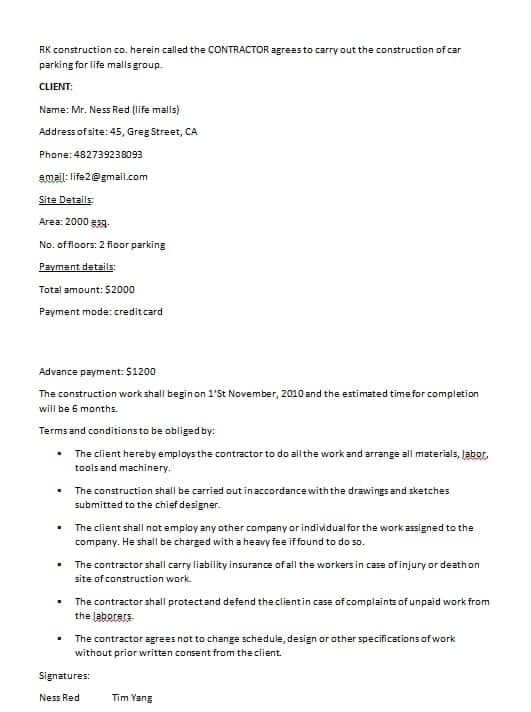
The template below provides a starting structure for documenting a construction project. Customize it to the project’s scope, payment arrangement, technical specifications, and applicable local requirements.
Here is the download link to download construction contract Template.

How to Use the Template
Complete the parties and project information, add the scope of work and specifications, enter the agreed price and payment milestones, and customize change-order, warranty, insurance, termination, and dispute provisions. Both parties should review the final document before signing.
Before You Use a Construction Contract
Assemble the contract package before signing: drawings, specifications, scope, price or pricing method, construction schedule, payment milestones, permit responsibilities, insurance requirements, and known site information. Identify each document by date or version so later revisions do not create uncertainty about what the contractor priced.
Example: Write a Complete Change Order
A useful change order identifies the requested change, revised drawings or specifications if any, added or reduced price, additional time, and signatures or approvals. For example, replacing a specified finish with a higher-cost product should record both the material difference and any labor or schedule impact before installation where practical.
Common Mistakes to Avoid
Avoid treating an estimate, allowance, and fixed price as if they mean the same thing. Do not leave responsibility for permits, inspections, owner-supplied items, site access, hidden conditions, or delays unclear. Final payment should be coordinated with the agreed completion, punch-list, warranty, and handover process.
Frequently Asked Questions
Who should sign a construction contract?
The agreement should be signed by the owner or authorized client representative and the contractor or authorized representative.
Why is a scope of work important?
It explains exactly what the contractor is expected to build, install, repair, or complete.
What are progress payments?
They are payments made as agreed portions or milestones of the construction work are completed.
Can construction work be changed after signing?
Yes. A written change-order process can document additional work, substitutions, revised prices, and schedule changes.
Should materials be specified?
Yes. Quality, specifications, quantities, and responsibility for supplying materials should be clear.
Is this template legal advice?
No. It is a general drafting resource and should be customized for the project and applicable law.
Construction Contract: Practical Review Checklist
Before using or signing this document, review every blank field and clause against the actual transaction. Confirm the legal names of the parties, dates, payment or consideration, responsibilities, deadlines, approval requirements, termination rights, and signature details. Remove provisions that do not apply and add any project-specific terms that are important to the arrangement.
Customize the Agreement for the Actual Situation
A downloadable contract sample is most useful as a drafting starting point. Avoid leaving generic wording unchanged when the real arrangement has different deliverables, payment milestones, notice periods, ownership rights, or risk allocation. Attach schedules, specifications, price lists, or other supporting documents when they form part of the agreement.
Final Checks Before Signing
- Check names, addresses, dates, amounts, and defined terms for consistency.
- Make sure responsibilities and deliverables are specific enough to understand and verify.
- Confirm payment dates, milestones, late-payment terms, and any deposits.
- Review renewal, cancellation, breach, notice, and termination provisions.
- Make sure all referenced exhibits and attachments are included.
- Keep a completed copy signed by all relevant parties.
Scope, Plans, and Construction Documents
A construction contract should connect the legal agreement to the documents that define the physical work. Identify drawings, specifications, schedules, bills of quantities, proposals, and approved revisions by date or version. Clarify who is responsible for design information, permits, inspections, site access, utilities, temporary facilities, and coordination with other contractors.
Progress Payments and Project Changes
Progress payments should be tied to understandable milestones, measured work, or a payment schedule. Explain invoice review, retainage where lawful, disputed amounts, and final payment requirements. A written change-order process is especially important: it should record the changed work, added or reduced price, schedule impact, and approval before work proceeds when practical. Also address delays, extensions of time, site conditions, completion inspection, punch-list items, warranties, and handover documents.
Recordkeeping and Practical Use
Keep the signed agreement together with every attachment, amendment, approval, invoice, notice, and other document that affects the parties’ obligations. Important communications should be recorded in a durable form rather than relying on memory. Before signing, compare the final document with the negotiated deal, confirm that blank spaces are completed or intentionally removed, and make sure each party receives the same final version. Templates provide structure, but the finished agreement should reflect the actual transaction and applicable law.
Legal Disclaimer
This Construction Contract Template is provided for general informational and drafting purposes and is not legal advice. Construction, licensing, building-code, employment, insurance, and payment laws vary by jurisdiction. Consider professional legal and technical review for significant projects.
