

A Home Repair Contract Template helps homeowners and contractors put the important details of a repair or improvement project in writing before work begins. Whether the job involves plumbing, electrical work, roofing, painting, flooring, HVAC service, solar equipment, or general home repairs, a clear agreement can reduce misunderstandings about price, scope, schedule, materials, and responsibilities.
What Is a Home Repair Contract?
A home repair contract is an agreement between a homeowner and a contractor or repair service provider describing the work to be completed and the terms of the project. It creates a written record of what each party has agreed to do, pay, provide, and deliver.
When Should You Use a Home Repair Agreement?
Use a written agreement whenever a repair project involves meaningful cost, several stages of work, specialized materials, a defined completion date, or a risk of disagreement. It is useful for both small residential repairs and larger renovation projects.
Key Clauses to Include
- Parties and property: Names, contact details, and the address of the home.
- Scope of work: A detailed description of every repair, installation, exclusion, and deliverable.
- Price and payment: Total price, deposit, milestones, final payment, and approved expenses.
- Materials: Who supplies materials and any required brands, grades, or specifications.
- Schedule: Start date, estimated completion date, working hours, and procedures for delays.
- Change orders: A written process for approving extra work or changes in price.
- Warranty: Coverage for workmanship or materials, duration, exclusions, and claim procedure.
- Insurance and liability: Responsibility for property damage, injuries, and required insurance.
- Termination: Notice, breach, unfinished work, final payment, and return of property.
- Disputes: Governing law and the agreed process for resolving disagreements.
Why a Written Home Repair Contract Matters
Verbal promises can be difficult to verify when a project changes or a dispute occurs. A written contract gives both sides a common reference point. It can help control scope creep, clarify payment milestones, document material choices, and establish what happens if work is delayed, defective, or incomplete.
Homeowner and Contractor Responsibilities
The contractor should perform the agreed work professionally, follow applicable safety and building requirements, protect the property, and communicate material changes. The homeowner should provide reasonable access, make agreed payments, make decisions or approvals on time, and identify known site conditions that could affect the work.
Change Orders and Additional Work
Repair projects often reveal hidden damage or require a different solution after work starts. The contract should explain that additional work requires approval and should record the revised scope, additional price, and any schedule change before the extra work is performed whenever practical.
Free Home Repair Contract Template
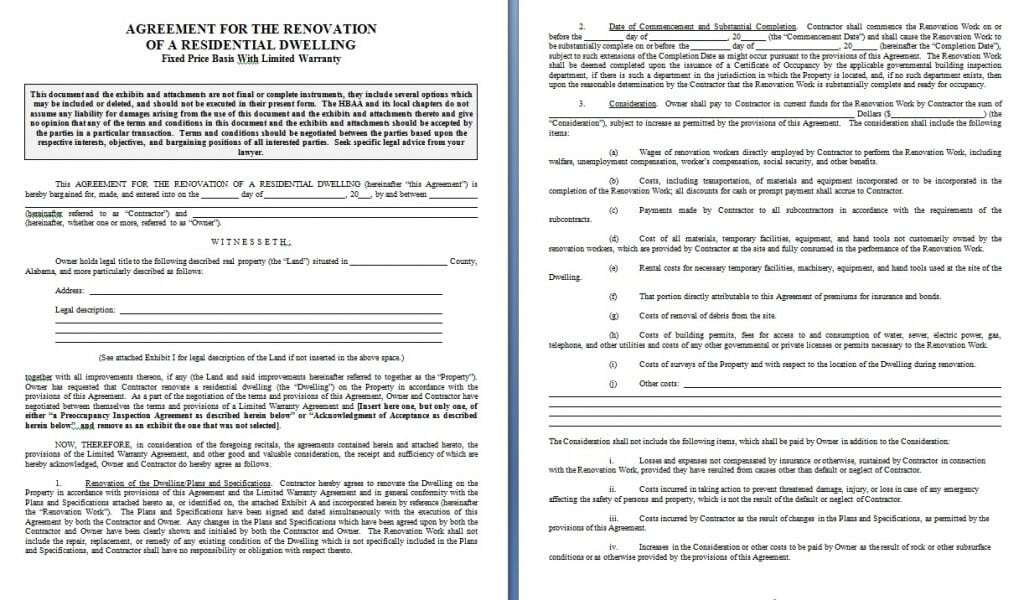
The template below provides a starting point for documenting a residential repair arrangement. Customize the parties, property, scope, price, schedule, materials, warranty, and other terms for the actual project.
Download Home repair contract template:

How to Use the Template
- Enter the homeowner and contractor details.
- Describe the property and exact repair work.
- Add the agreed price, deposit, payment schedule, and approved expenses.
- Specify materials, equipment, start date, completion target, and change-order rules.
- Customize warranty, insurance, liability, termination, and dispute provisions.
- Review the final agreement and attachments before signing.
Before You Use a Home Repair Contract
Walk through the property and convert the proposed repair into a written scope. Record locations, dimensions where relevant, materials, brands or quality levels, finishes, demolition, disposal, cleanup, exclusions, and existing damage. Photographs and product specifications can be useful attachments.
Example: Describe the Repair, Not Just the Room
Instead of “repair bathroom,” state the specific work—for example, remove a damaged fixture, repair identified substrate damage, install a specified replacement, reconnect services, seal affected areas, and remove debris. If hidden damage may change the price, explain the change-order process before work starts.
Common Mistakes to Avoid
Do not pay attention only to price. The schedule, material responsibility, permits, change orders, access, cleanup, warranty, inspection, and final completion process can be equally important. Avoid approving significant extra work verbally when a written change order is practical.
Frequently Asked Questions
What should a home repair contract include?
At minimum, it should identify the parties and property and explain the scope, price, payment terms, schedule, materials, change orders, warranties, and termination arrangements.
Can a contractor charge more than the original estimate?
Additional costs may arise when the scope changes or unexpected conditions are discovered. The contract should explain how those changes are priced and approved.
Should a repair contract include a warranty?
If a warranty is offered, its duration, coverage, exclusions, and claim process should be stated clearly.
Are electronic signatures valid?
Electronic signatures may be legally recognized in many jurisdictions, but the applicable rules should be checked for the particular transaction.
Is this template legal advice?
No. It is a general drafting resource and should be customized for the project and applicable local law.
Home Repair Contract: Practical Review Checklist
Before using or signing this document, review every blank field and clause against the actual transaction. Confirm the legal names of the parties, dates, payment or consideration, responsibilities, deadlines, approval requirements, termination rights, and signature details. Remove provisions that do not apply and add any project-specific terms that are important to the arrangement.
Customize the Agreement for the Actual Situation
A downloadable contract sample is most useful as a drafting starting point. Avoid leaving generic wording unchanged when the real arrangement has different deliverables, payment milestones, notice periods, ownership rights, or risk allocation. Attach schedules, specifications, price lists, or other supporting documents when they form part of the agreement.
Final Checks Before Signing
- Check names, addresses, dates, amounts, and defined terms for consistency.
- Make sure responsibilities and deliverables are specific enough to understand and verify.
- Confirm payment dates, milestones, late-payment terms, and any deposits.
- Review renewal, cancellation, breach, notice, and termination provisions.
- Make sure all referenced exhibits and attachments are included.
- Keep a completed copy signed by all relevant parties.
Defining Repair Work and Existing Conditions
Home repair contracts should separate the contractor’s promised work from existing defects and excluded work. Photos, measurements, product specifications, model numbers, and a written scope can reduce uncertainty. If walls, floors, plumbing, wiring, or other concealed areas may reveal additional damage, explain how discoveries will be documented and priced before extra work proceeds.
Completion, Punch Lists, and Warranty Records
A practical completion process includes an inspection and a punch list of unfinished or defective items. State when final payment becomes due and whether a reasonable amount is retained until listed items are completed where local law permits. Keep invoices, change orders, product warranties, permit records, inspection documents, and completion photos with the signed agreement. If workmanship is warranted, define the warranty period, covered defects, exclusions, notice method, and contractor response process.
Recordkeeping and Practical Use
Keep the signed agreement together with every attachment, amendment, approval, invoice, notice, and other document that affects the parties’ obligations. Important communications should be recorded in a durable form rather than relying on memory. Before signing, compare the final document with the negotiated deal, confirm that blank spaces are completed or intentionally removed, and make sure each party receives the same final version. Templates provide structure, but the finished agreement should reflect the actual transaction and applicable law.
Legal Disclaimer
This Home Repair Contract Template is provided for general informational and drafting purposes only. It is not legal advice and does not guarantee compliance with local laws, licensing rules, building codes, or consumer-protection requirements. Consider qualified professional review for significant projects.
