A dealership contract is one of the most important legal agreements in the distribution and sales industry. Whether you are a manufacturer appointing dealers or a business owner becoming an authorized dealer, a properly drafted dealership agreement helps protect both parties and prevents future disputes.
Using a professionally written dealership contract template can save time, reduce legal confusion, and clearly define the relationship between suppliers and dealers. However, before using any template, it is important to understand what a dealership contract includes, why it matters, and which clauses should never be ignored.
In this guide, we will explain everything about dealership contracts, including their purpose, essential terms, benefits, legal considerations, and frequently asked questions.
What Is a Dealership Contract?
A dealership contract is a legal agreement between a supplier, manufacturer, or distributor and a dealer authorized to sell products or services in a specific market or territory.
The agreement defines:
- Rights and responsibilities of both parties
- Product pricing and supply terms
- Sales territory restrictions
- Payment conditions
- Termination rules
- Warranty and liability obligations
- Marketing and branding guidelines
Dealership agreements are commonly used in industries such as:
- Automobiles
- Solar equipment
- Electronics
- Batteries
- Agricultural machinery
- Construction equipment
- Consumer products
- Software and technology
Without a written agreement, misunderstandings about commissions, exclusivity, inventory, or territorial rights can create serious business disputes.
Why a Dealership Agreement Is Important
A dealership contract protects both the supplier and the dealer by clearly documenting expectations.
Benefits for Manufacturers and Suppliers
- Establishes control over branding and product distribution
- Defines dealer obligations and performance targets
- Protects confidential business information
- Reduces legal risks and unauthorized activities
- Creates structured sales channels
Benefits for Dealers
- Provides official authorization to sell products
- Clarifies commission and profit structure
- Secures territory or market rights
- Defines support and warranty responsibilities
- Prevents unfair termination
A well-written dealership agreement creates transparency and long-term business stability.
Key Elements of a Dealership Contract
Every dealership contract template should include several essential clauses.
1. Parties Information
The agreement must clearly identify:
- Manufacturer or supplier name
- Dealer name
- Business addresses
- Contact details
- Registration numbers if applicable
This confirms the legal identity of both parties.
2. Scope of Dealership
This section explains:
- Which products the dealer can sell
- Whether the dealership is exclusive or non-exclusive
- Geographic territory covered
- Sales limitations if any
For example, a solar inverter company may appoint a dealer exclusively for Faisalabad while restricting sales outside Punjab.
3. Product Pricing and Payment Terms
A dealership agreement should specify:
- Wholesale pricing
- Payment deadlines
- Advance payment requirements
- Credit terms
- Currency and taxes
- Late payment penalties
Clear financial terms help avoid future conflicts.
4. Dealer Responsibilities
This section outlines dealer obligations such as:
- Maintaining inventory
- Marketing products
- Providing customer service
- Meeting sales targets
- Following branding guidelines
- Maintaining showroom standards
Manufacturers often require dealers to meet minimum sales quotas.
5. Supplier Responsibilities
The supplier’s obligations may include:
- Product delivery timelines
- Technical support
- Warranty services
- Training programs
- Marketing materials
- Product updates
A balanced contract should protect both sides equally.
Exclusive vs Non-Exclusive Dealership Agreements
Exclusive Dealership
An exclusive dealership means only one authorized dealer can operate within a defined territory.
Advantages
- Reduced competition
- Higher profit potential
- Stronger market control
Disadvantages
- Strict performance expectations
- Greater business responsibility
Non-Exclusive Dealership
A supplier can appoint multiple dealers in the same area.
Advantages
- Easier market entry
- Lower pressure on sales targets
Disadvantages
- Increased competition
- Reduced territorial protection
Businesses should carefully evaluate which structure suits their goals.
Duration and Renewal Terms
Every dealership contract should define:
- Start date
- Contract duration
- Renewal process
- Automatic renewal conditions
- Notice requirements
Some agreements renew automatically unless either party gives written notice.
Termination Clause in a Dealership Contract
The termination section is one of the most critical parts of the agreement.
The contract should explain:
- Grounds for termination
- Breach of contract conditions
- Notice period
- Outstanding payment settlement
- Inventory return procedures
- Post-termination obligations
Common termination reasons include:
- Failure to meet sales targets
- Late payments
- Trademark misuse
- Unauthorized resale
- Bankruptcy
Without a proper termination clause, disputes can become expensive and lengthy.
Confidentiality and Non-Disclosure Clauses
Dealers often receive sensitive information including:
- Pricing strategies
- Customer databases
- Supplier contacts
- Product specifications
- Marketing plans
A confidentiality clause prevents unauthorized disclosure of business information.
This is especially important in competitive industries such as electronics, batteries, automotive, and solar energy.
Intellectual Property and Branding Rights
Manufacturers usually allow dealers limited use of:
- Company logos
- Trademarks
- Product images
- Advertising materials
The agreement should clearly state:
- Permitted usage
- Branding restrictions
- Advertising approvals
- Trademark ownership
Improper brand usage can damage company reputation and create legal liability.
Dispute Resolution and Governing Law
A dealership contract should specify how disputes will be handled.
Common methods include:
- Arbitration
- Mediation
- Court litigation
The agreement should also mention:
- Governing law jurisdiction
- Court location
- Applicable business regulations
For international dealerships, this clause becomes extremely important.
Common Mistakes to Avoid in Dealership Agreements
Many businesses use generic templates without customization. This can create serious legal problems later.
Common Mistakes Include
Ignoring Local Laws
A US-based template may not comply with Pakistani business regulations.
Missing Termination Terms
Poorly written termination clauses often lead to disputes.
Undefined Territory Rights
Ambiguous territorial rights create conflicts between dealers.
No Performance Metrics
Without sales targets, supplier expectations become unclear.
Weak Payment Clauses
Incomplete payment terms increase financial risk.
Always review and customize templates according to your business needs.
Who Should Use a Dealership Contract Template?
A dealership agreement template is useful for:
- Manufacturers
- Importers
- Distributors
- Solar companies
- Automotive businesses
- Battery suppliers
- Electronics companies
- Machinery dealers
- Franchise-style businesses
Small businesses especially benefit because templates reduce legal drafting costs.
Can You Use a Free Dealership Contract Template?
Yes, free templates are useful for:
- Initial drafts
- Understanding agreement structure
- Internal discussions
- Basic business arrangements
However, businesses should ideally have the final version reviewed by a qualified lawyer, especially for high-value or long-term dealership relationships.
A professionally reviewed contract can prevent major legal and financial losses later.
Tips for Creating a Strong Dealership Agreement
Keep Language Clear
Avoid confusing legal jargon whenever possible.
Define Responsibilities Properly
Both parties should know their exact obligations.
Include Dispute Resolution
This saves time and legal expenses.
Protect Intellectual Property
Clearly define branding and trademark rights.
Review Local Laws
Ensure compliance with your country’s business regulations.
Update Agreements Regularly
Business conditions change over time. Agreements should evolve too.
Final Thoughts
A dealership contract is much more than a simple business document. It defines the foundation of the entire dealer-supplier relationship. A carefully drafted agreement protects profits, clarifies expectations, reduces misunderstandings, and helps businesses grow with confidence.
Whether you are appointing dealers for solar equipment, batteries, electronics, automobiles, or consumer products, using a reliable dealership contract template is an excellent starting point. However, customization and legal review are always recommended for important business arrangements.
Businesses that invest time in creating strong agreements usually experience fewer disputes and stronger long-term partnerships.
Frequently Asked Questions (FAQs)
What is the purpose of a dealership contract?
A dealership contract legally defines the relationship between a supplier and a dealer, including pricing, territory rights, obligations, and termination terms.
Is a dealership agreement legally binding?
Yes, once signed by both parties, a dealership agreement becomes a legally enforceable contract.
What is the difference between a dealer and a distributor?
A distributor typically supplies products to multiple dealers, while a dealer usually sells products directly to customers.
Can a dealership agreement be terminated early?
Yes, most contracts include termination clauses explaining when and how either party may end the agreement.
Should dealership contracts include sales targets?
Yes, sales targets help establish performance expectations and accountability.
Can I use a free dealership contract template?
Yes, but it is best to customize the template and have it reviewed by a lawyer for important business agreements.
What happens if a dealer violates branding rules?
The supplier may issue warnings, impose penalties, or terminate the dealership agreement depending on the contract terms.
Are exclusive dealership agreements better?
It depends on the business model. Exclusive agreements offer stronger territorial protection, while non-exclusive agreements provide broader market flexibility.
Download Dealership Contract Template:
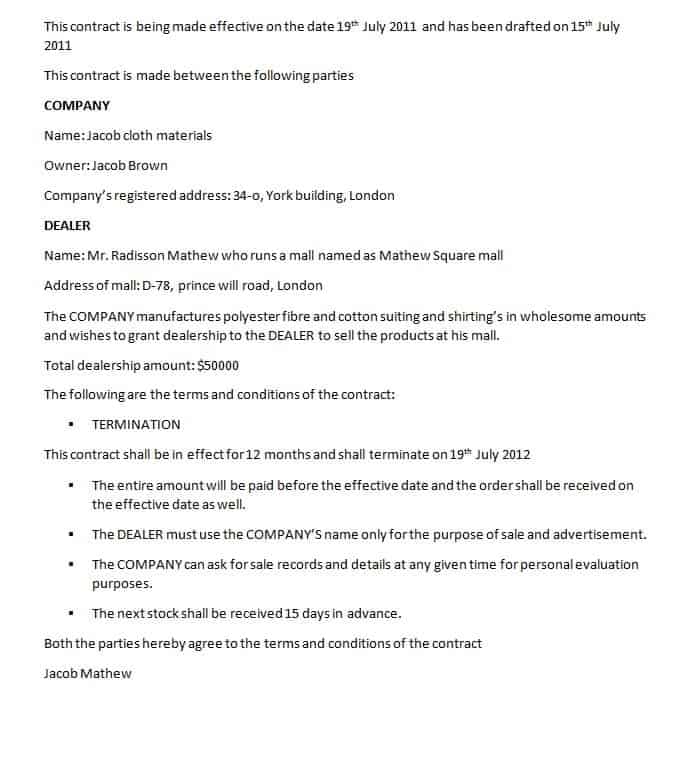
Free download dealership contract template here.