

An Export Contract Template helps exporters and importers document an international sale of goods or services. Because cross-border transactions can involve different currencies, delivery rules, customs procedures, taxes, and legal systems, a detailed written agreement is an important way to establish clear commercial expectations.
What Is an Export Contract?
An export agreement is a contract between a seller in one country and a buyer in another. It normally defines the products or services being supplied, quantity, price, delivery arrangements, payment terms, documents, risk allocation, and procedures for resolving disputes.
Key Terms to Include
- Buyer and exporter details: Legal names, addresses, registration details, and authorized representatives.
- Product specifications: Description, quantity, quality standards, packaging, labeling, and inspection requirements.
- Price and currency: Unit price, total price, currency, taxes, duties, and permitted adjustments.
- Delivery terms: Shipment dates, destination, transfer of risk, insurance, and applicable Incoterms where agreed.
- Payment: Advance payment, bank transfer, documentary collection, letter of credit, due dates, and banking costs.
- Export documents: Commercial invoice, packing list, transport documents, certificates, and other required paperwork.
- Inspection and acceptance: Procedures for checking goods and notifying the seller about defects or shortages.
- Force majeure: Treatment of events outside a party’s reasonable control.
- Disputes and governing law: Applicable law, jurisdiction, arbitration or other agreed dispute procedures.
Why Use a Written Export Agreement?
A written export contract reduces uncertainty in international trade. It gives the parties a clear record of what was ordered, when it must be delivered, how it will be paid for, and which party is responsible for shipping, insurance, documentation, and other obligations.
Important International Trade Considerations
Cross-border transactions require particular attention to customs requirements, import and export restrictions, sanctions and trade controls, currency issues, taxes, product standards, and shipping documentation. Delivery terms should be selected carefully because they affect costs, responsibilities, and transfer of risk.
Things to Check Before Signing
Confirm that the buyer and seller are correctly identified and authorized to sign. Check product specifications, pricing, currency, delivery location, payment security, inspection rights, insurance, required documents, and dispute provisions. For substantial transactions, obtain advice from professionals familiar with international trade and the relevant jurisdictions.
Free Export Contract Template
The template below provides a starting structure for an export agreement. Customize it to the products, countries, delivery terms, payment method, and regulatory requirements involved.
Free Export Contract Template Here
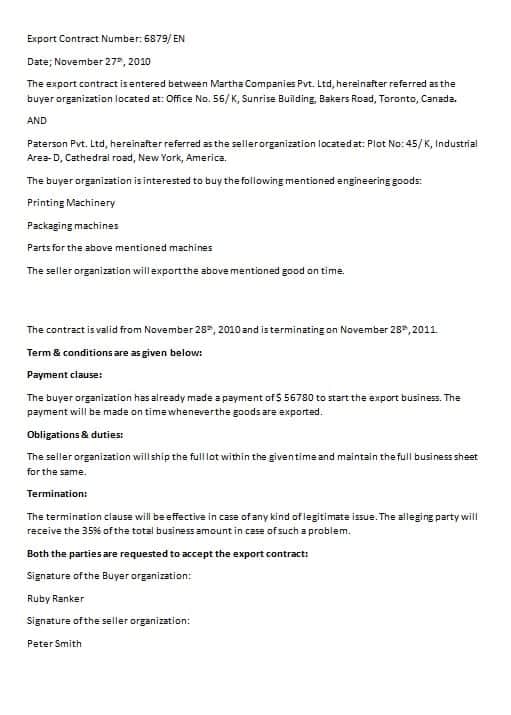

How to Use the Template
Enter accurate buyer and exporter information, describe the goods or services, add price and payment details, define delivery obligations, and include any required documents or schedules. Review the final agreement before signing and keep copies with the transaction records.
Before You Use an Export Contract
Map the physical and documentary journey of the goods before drafting. Identify the exact goods, destination, delivery point, transport method, agreed trade term if one is used, customs responsibilities, required licenses or certificates, insurance, inspection requirements, currency, and payment mechanism. Product descriptions should be consistent across the contract and shipping documents.
Example: Allocate a Border-Cost Risk
Rather than saying “seller handles shipping,” identify the delivery point and which party bears freight, insurance, export clearance, import clearance, duties, storage, and charges caused by customs delay. If documents trigger payment, state which documents are required and when they must be presented.
Common Mistakes to Avoid
Avoid vague delivery expressions that do not allocate cost and risk. Do not assume domestic warranty, tax, product-standard, or dispute provisions automatically work across borders. Also plan for sanctions, export restrictions, rejected documentation, port delays, damaged cargo, and currency or banking issues relevant to the transaction.
Frequently Asked Questions
Who uses an export contract?
Exporters and overseas buyers use export agreements to document international sales and service transactions.
What is usually included?
Common terms cover products, price, payment, delivery, shipping documents, inspection, insurance, risk, and dispute resolution.
Why are delivery terms important?
They help allocate shipping costs, responsibilities, and risk between buyer and seller.
Can an export contract specify a foreign currency?
Yes. The contract should clearly identify the agreed currency and payment arrangements.
Should international contracts mention governing law?
Yes. Applicable law and dispute procedures are important in cross-border transactions.
Is this template legal advice?
No. It is a general drafting resource and should be adapted to the transaction and applicable laws.
Export Contract: Practical Review Checklist
Before using or signing this document, review every blank field and clause against the actual transaction. Confirm the legal names of the parties, dates, payment or consideration, responsibilities, deadlines, approval requirements, termination rights, and signature details. Remove provisions that do not apply and add any project-specific terms that are important to the arrangement.
Customize the Agreement for the Actual Situation
A downloadable contract sample is most useful as a drafting starting point. Avoid leaving generic wording unchanged when the real arrangement has different deliverables, payment milestones, notice periods, ownership rights, or risk allocation. Attach schedules, specifications, price lists, or other supporting documents when they form part of the agreement.
Final Checks Before Signing
- Check names, addresses, dates, amounts, and defined terms for consistency.
- Make sure responsibilities and deliverables are specific enough to understand and verify.
- Confirm payment dates, milestones, late-payment terms, and any deposits.
- Review renewal, cancellation, breach, notice, and termination provisions.
- Make sure all referenced exhibits and attachments are included.
- Keep a completed copy signed by all relevant parties.
Documents and Delivery Terms
Export transactions often involve more documentation than domestic sales. Depending on the goods and destination, the parties may need commercial invoices, packing lists, certificates of origin, transport documents, inspection certificates, insurance documents, licenses, or customs declarations. The contract should identify which party prepares each document, who pays related charges, and when documents must be provided.
Currency, Compliance, and Transit Risk
International payment creates currency and collection risks. Specify the currency, payment method, banking charges, payment timing, and any documentary requirements. Clearly identify the agreed delivery rule and location, rather than using vague terms such as “delivered.” The parties should also consider export controls, sanctions, customs requirements, product standards, taxes and duties, cargo insurance, inspection, damaged goods, and procedures for delays at ports or borders.
Recordkeeping and Practical Use
Keep the signed agreement together with every attachment, amendment, approval, invoice, notice, and other document that affects the parties’ obligations. Important communications should be recorded in a durable form rather than relying on memory. Before signing, compare the final document with the negotiated deal, confirm that blank spaces are completed or intentionally removed, and make sure each party receives the same final version. Templates provide structure, but the finished agreement should reflect the actual transaction and applicable law.
Additional Practical Considerations
For an export transaction, also record the destination, shipping route assumptions, required marks or labels, document deadlines, and the party responsible for correcting customs-document errors. If payment depends on documents, the contract should use the same product descriptions, quantities, dates, and shipping terms that will appear on invoices and transport records. This consistency can reduce avoidable discrepancies. The parties should also decide who communicates with freight forwarders, customs brokers, insurers, and inspection providers, and who bears storage, demurrage, redelivery, or other charges caused by delay. These practical details are especially valuable when goods cross several borders or move through multiple carriers.
Legal Disclaimer
This Export Contract Template is provided for general informational and drafting purposes and is not legal advice. International trade requirements vary by country and transaction. Obtain qualified professional advice before relying on it for a specific export or import arrangement.
