A Sales Contract Template helps a buyer and seller document the terms of a purchase clearly before completing a transaction. It can be used for products, equipment, inventory, services, or other property when the parties need a written record of price, payment, delivery, condition, and responsibilities.
What Is a Sales Contract?
A sales contract is an agreement in which a seller agrees to provide specified goods or property and the buyer agrees to provide the agreed consideration. A well-drafted contract explains what is being sold, how much it costs, when payment and delivery occur, and what happens if the goods do not meet the agreed requirements.
When Should You Use a Sales Agreement?
A written sales agreement is especially useful for high-value purchases, business-to-business transactions, custom products, installment sales, recurring orders, or transactions where quality and delivery requirements need to be documented.
Key Clauses in a Sales Contract
- Buyer and seller details: Legal names, addresses, and contact information.
- Goods or property: Description, quantity, model, specifications, condition, and included items.
- Purchase price: Total price, unit price, taxes, discounts, and any deposit.
- Payment terms: Due dates, installments, credit terms, and accepted payment methods.
- Delivery: Date, location, shipping responsibility, and transfer of risk.
- Inspection and acceptance: Time and procedure for checking the goods.
- Warranties: Seller warranties, exclusions, and procedures for defective goods.
- Title and ownership: When ownership transfers and whether liens or security interests exist.
- Default and remedies: Consequences of non-payment, non-delivery, or breach.
- Dispute resolution: Governing law and procedures for resolving disagreements.
Benefits of a Written Sales Contract
A detailed agreement reduces uncertainty and gives the parties a reference for price, specifications, delivery, and acceptance. It can also make it easier to resolve disagreements about defective goods, late delivery, payment, or cancellation.
Things to Check Before Signing
Confirm that the product description, quantities, price, payment schedule, delivery terms, inspection period, warranty, taxes, and return or cancellation provisions are accurate. For regulated products, international transactions, or substantial purchases, additional legal and commercial requirements may apply.
Free Sales Contract Template
Use the template below as a starting point and customize it to the actual buyer, seller, goods, price, delivery arrangements, and applicable law.
Download Sales Contract Template:
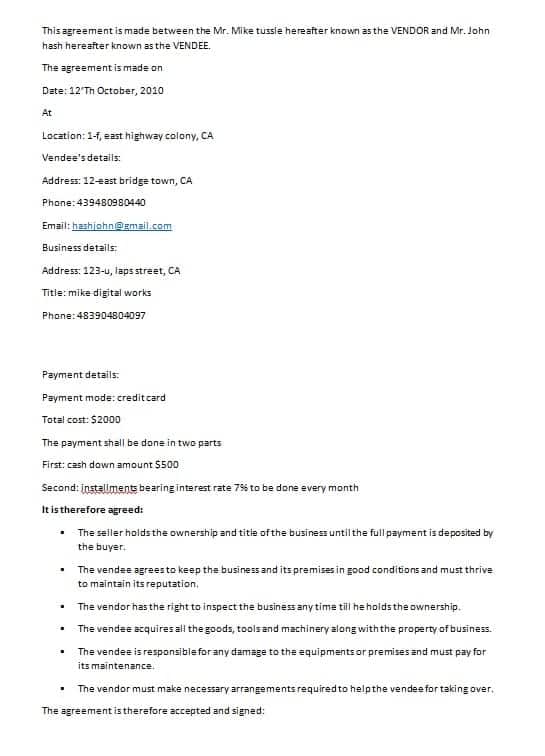
A free sample sales contract template and agreement is here for your download.
How to Use the Template
- Enter buyer and seller details.
- Describe the goods or property precisely.
- Add price, payment, taxes, and delivery terms.
- Customize inspection, warranty, title, and risk provisions.
- Add default, cancellation, termination, and dispute terms as needed.
- Review the completed contract before signing or exchanging payment.
Before You Use a Sales Contract
Record exactly what is being sold, quantity, specification or condition, price, tax treatment, delivery, payment, and any installation or support. If the seller uses quotations or purchase orders, decide which documents form the contract and which terms control if there is a conflict.
Example: Use an Inspection Window
For goods that need checking, the agreement can give the buyer a defined period after delivery to inspect for stated requirements and report nonconformity. This separates receipt from acceptance. Latent defects can be handled under the warranty rather than forcing the buyer to discover everything immediately.
Common Mistakes to Avoid
Avoid inconsistent warranty statements across the contract, website, quotation, and product materials. Address returns, cancellation, damaged delivery, title and risk, deposits, late payment, and any retention of title or security arrangement subject to applicable law. Keep delivery and acceptance evidence for significant transactions.
Frequently Asked Questions
What should a sales contract include?
It should identify the parties and goods and establish price, payment, delivery, inspection, warranty, ownership, and remedies.
Can a sales contract cover installment payments?
Yes. The agreement can specify deposits, installment amounts, due dates, and consequences of late payment.
Who is responsible for delivery?
The contract should clearly allocate shipping costs, delivery duties, and risk during transportation.
Can defective goods be returned?
Return, replacement, repair, refund, and warranty rights depend on the contract and applicable law and should be stated clearly.
Is a sales contract legally binding?
A properly formed and signed agreement may be legally binding, but enforceability depends on the transaction and applicable law.
Sales Contract: Practical Review Checklist
Before using or signing this document, review every blank field and clause against the actual transaction. Confirm the legal names of the parties, dates, payment or consideration, responsibilities, deadlines, approval requirements, termination rights, and signature details. Remove provisions that do not apply and add any project-specific terms that are important to the arrangement.
Customize the Agreement for the Actual Situation
A downloadable contract sample is most useful as a drafting starting point. Avoid leaving generic wording unchanged when the real arrangement has different deliverables, payment milestones, notice periods, ownership rights, or risk allocation. Attach schedules, specifications, price lists, or other supporting documents when they form part of the agreement.
Final Checks Before Signing
- Check names, addresses, dates, amounts, and defined terms for consistency.
- Make sure responsibilities and deliverables are specific enough to understand and verify.
- Confirm payment dates, milestones, late-payment terms, and any deposits.
- Review renewal, cancellation, breach, notice, and termination provisions.
- Make sure all referenced exhibits and attachments are included.
- Keep a completed copy signed by all relevant parties.
Products, Orders, and Acceptance
A sales contract should clearly identify the goods or services being sold, quantity, specifications, price, taxes, delivery arrangements, and payment terms. For goods, record model numbers, quality standards, packaging, inspection rights, and when title and risk transfer. For services bundled with a sale, separate installation, training, maintenance, or support obligations.
Warranties, Returns, and Payment Protection
State any express warranties and avoid contradicting them elsewhere in the agreement. Explain procedures and time limits for reporting defects, returns, replacement, repair, or credits. Sellers should define invoice timing and consequences of nonpayment within applicable law; buyers should understand deposits, cancellation terms, and acceptance procedures. For recurring sales, address forecasts, purchase orders, price changes, supply interruptions, and termination.
Recordkeeping and Practical Use
Keep the signed agreement together with every attachment, amendment, approval, invoice, notice, and other document that affects the parties’ obligations. Important communications should be recorded in a durable form rather than relying on memory. Before signing, compare the final document with the negotiated deal, confirm that blank spaces are completed or intentionally removed, and make sure each party receives the same final version. Templates provide structure, but the finished agreement should reflect the actual transaction and applicable law.
Additional Practical Considerations
For higher-value sales, the parties can improve clarity by documenting acceptance separately from delivery. Delivery confirms that the buyer received the goods; acceptance can confirm that the goods meet agreed specifications after a defined inspection period. The contract should state whether silence counts as acceptance and how hidden defects discovered later are handled under any warranty. If the seller retains title until payment, or if financing or security rights are involved, applicable registration and consumer or commercial rules may require additional steps. A signed delivery record, inspection report, and payment receipt can provide useful evidence of performance.
Legal Disclaimer
This Sales Contract Template is provided for general informational and drafting purposes only and is not legal advice. Customize it for the transaction and jurisdiction, and seek professional advice for significant or regulated purchases.