

A Commercial Contract Template helps businesses document agreements involving the sale or purchase of goods and services, licensing, supply, professional services, and other commercial relationships. A well-structured agreement clarifies price, performance, payment, delivery, risk, and remedies before the transaction begins.
What Is a Commercial Contract?
A commercial contract is an agreement used for business transactions. It can cover the exchange of goods or services, licensing of intellectual property or technical know-how, distribution, procurement, consulting, maintenance, and many other commercial activities.
Common Types of Commercial Contracts
- Fixed-price contracts: The parties agree to a defined price for the specified scope, subject to the contract’s change provisions.
- Time and materials contracts: Charges are based on agreed labor rates and material or other allowable costs.
- Supply and sales agreements: Used to establish recurring or one-time purchases and deliveries.
- Service agreements: Define professional or operational services and performance requirements.
Key Clauses to Include
- Parties: Legal names, addresses, and authorized representatives.
- Scope: Detailed goods, services, specifications, quantities, deliverables, and standards.
- Price and payment: Contract price, invoices, due dates, taxes, deposits, and late-payment terms.
- Delivery and acceptance: Delivery dates, locations, inspection, acceptance, and transfer of risk where applicable.
- Changes: Procedure for amendments, substitutions, extra work, and price adjustments.
- Warranties: Appropriate product, service, or workmanship warranties and exclusions.
- Confidentiality and intellectual property: Protection and ownership of sensitive information and work product.
- Liability and insurance: Allocation of specified risks and required coverage.
- Termination: Notice, breach, cure periods, insolvency, and consequences of ending the agreement.
- Disputes: Governing law, jurisdiction, negotiation, mediation, arbitration, or court procedures.
Why Commercial Contracts Matter
Business transactions can involve substantial financial and operational risk. A written contract creates a shared record of what each party agreed to provide, what the customer must pay, when performance is due, and what remedies are available if something goes wrong.
Things to Check Before Signing
Review the scope, pricing model, payment terms, delivery obligations, warranties, intellectual property, confidentiality, liability, insurance, renewal, termination, and dispute clauses. Make sure referenced specifications or schedules are attached and that the person signing has authority to bind the business.
Free Commercial Contract Template
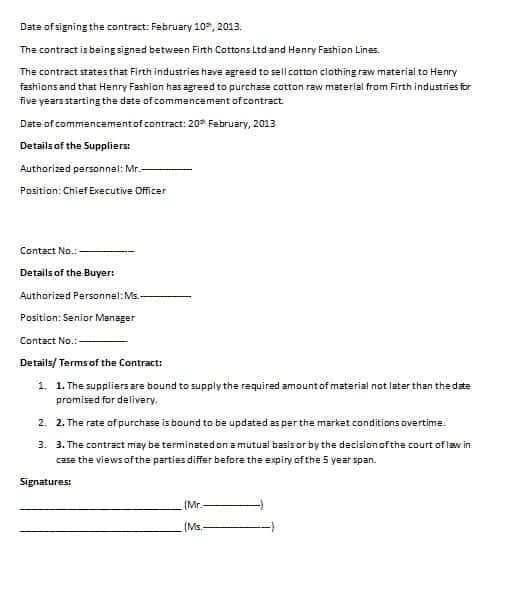
The template below is a useful starting point for preparing a commercial agreement. Customize it to the transaction, industry, parties, and applicable law.
Here is download link to download that commercial contract sample.

How to Use the Template
Enter the parties’ legal information, define the transaction and deliverables, add the agreed price and payment structure, and customize risk, warranty, confidentiality, termination, and dispute provisions. Review the final document before signing.
Before You Use a Commercial Contract
Identify the commercial objective and the documents that describe it. A master contract may set legal terms while purchase orders, statements of work, specifications, or price schedules describe individual transactions. Decide which document controls if terms conflict and who has authority to place or accept orders.
Example: Build an Acceptance Process
For a deliverable that requires approval, define what is submitted, how long the customer has to review it, objective reasons for rejection, and how corrections are handled. This is stronger than saying work must be “satisfactory,” which can mean different things to each party.
Common Mistakes to Avoid
Avoid broad obligations that cannot be measured. Check renewal dates, automatic extensions, price-adjustment rights, minimum purchases, exclusivity, service levels, and termination assistance. Make sure liability, warranty, confidentiality, data, and intellectual-property provisions match the actual risk rather than appearing only because they were in another contract.
Frequently Asked Questions
What is a commercial contract used for?
It documents business transactions involving goods, services, licensing, supply, distribution, or other commercial obligations.
What is a fixed-price contract?
It generally establishes a defined price for an agreed scope, subject to any contractual change mechanism.
What is a time and materials contract?
It generally calculates charges using agreed labor rates and allowable material or other costs.
Should commercial contracts include delivery terms?
Yes. Delivery timing, location, inspection, acceptance, and risk allocation should be clear when goods are involved.
Can a commercial contract be amended?
Yes, provided the agreement includes or permits an appropriate written amendment or change process.
Is this template legal advice?
No. It is a general drafting resource and should be adapted to the specific transaction and applicable law.
Commercial Contract: Practical Review Checklist
Before using or signing this document, review every blank field and clause against the actual transaction. Confirm the legal names of the parties, dates, payment or consideration, responsibilities, deadlines, approval requirements, termination rights, and signature details. Remove provisions that do not apply and add any project-specific terms that are important to the arrangement.
Customize the Agreement for the Actual Situation
A downloadable contract sample is most useful as a drafting starting point. Avoid leaving generic wording unchanged when the real arrangement has different deliverables, payment milestones, notice periods, ownership rights, or risk allocation. Attach schedules, specifications, price lists, or other supporting documents when they form part of the agreement.
Final Checks Before Signing
- Check names, addresses, dates, amounts, and defined terms for consistency.
- Make sure responsibilities and deliverables are specific enough to understand and verify.
- Confirm payment dates, milestones, late-payment terms, and any deposits.
- Review renewal, cancellation, breach, notice, and termination provisions.
- Make sure all referenced exhibits and attachments are included.
- Keep a completed copy signed by all relevant parties.
Defining the Commercial Deal
A commercial contract should translate the business deal into measurable obligations. Describe products, services, quantities, specifications, service levels, delivery dates, acceptance standards, pricing, taxes, invoicing, and payment timing. If forecasts or purchase estimates are not binding commitments, say so. If minimum volumes or exclusivity apply, define them precisely.
Risk Allocation and Business Continuity
Consider which risks each party can realistically control. Relevant clauses may cover warranties, indemnities, insurance, liability limits, confidentiality, intellectual property, data security, subcontracting, regulatory compliance, and force majeure. For ongoing arrangements, include continuity issues such as renewal, price reviews, service failures, transition assistance, return of data or property, and obligations that survive termination.
Recordkeeping and Practical Use
Keep the signed agreement together with every attachment, amendment, approval, invoice, notice, and other document that affects the parties’ obligations. Important communications should be recorded in a durable form rather than relying on memory. Before signing, compare the final document with the negotiated deal, confirm that blank spaces are completed or intentionally removed, and make sure each party receives the same final version. Templates provide structure, but the finished agreement should reflect the actual transaction and applicable law.
Additional Practical Considerations
For recurring commercial relationships, it is useful to establish an order-of-precedence clause explaining which document controls if the master agreement, purchase order, proposal, specification, or later statement of work contains inconsistent terms. The parties should also decide whether routine purchase orders can change legal terms or only quantities and delivery details. Clear notice procedures matter as well: identify valid notice addresses, permitted delivery methods, and when a notice is treated as received. These administrative provisions may seem minor at signing, but they can become important when prices change, deadlines are disputed, or one party wants to terminate the relationship.
Legal Disclaimer
This Commercial Contract Template is provided for general informational and drafting purposes and is not legal advice. Commercial laws and requirements vary by jurisdiction and industry. Consider qualified professional review for important transactions.
