

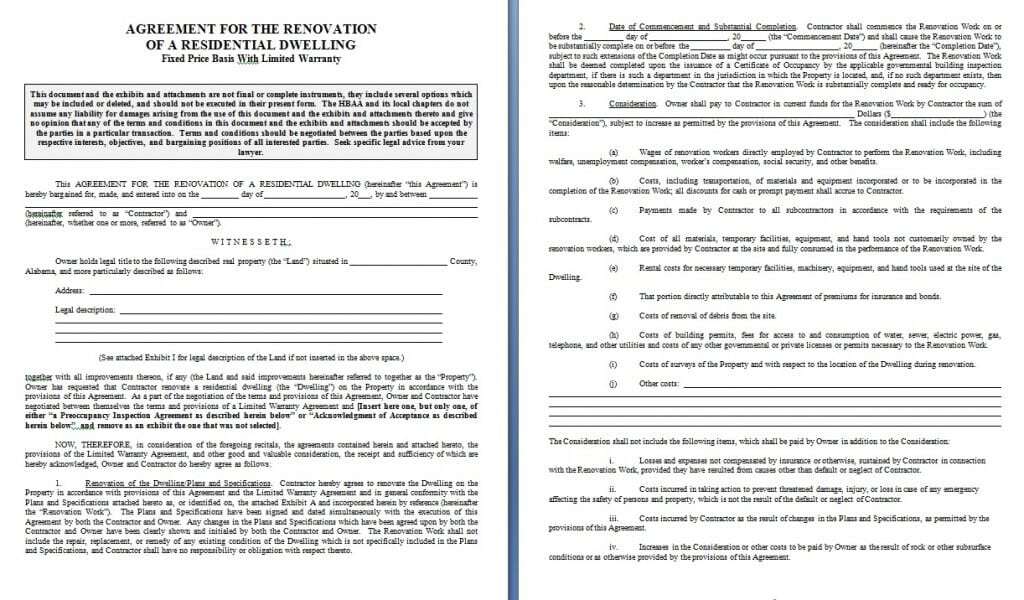
A Renovation Contract Template helps a property owner and contractor put the details of a home, apartment, room, office, or commercial renovation project in writing. Before renovation work begins, a clear written agreement can reduce misunderstandings about the scope of work, price, materials, deadlines, payments, and responsibility for changes or damage. This free renovation contract template provides a practical starting point that can be edited to suit the project.
Renovation projects often change as work progresses, which makes written terms especially important. A good agreement gives both parties a shared reference for what was originally agreed and how additional work should be approved and priced.
What Is a Renovation Contract?
A renovation contract is a written agreement between a property owner and a contractor or renovation company. It describes the work to be completed, the agreed price or pricing method, payment schedule, materials, project timeline, responsibilities, and other conditions. Depending on the project, it can also address permits, inspections, insurance, warranties, cleanup, subcontractors, and dispute resolution.
When Should You Use a Renovation Contract?
Use a renovation agreement before work starts, particularly when the project involves significant money, multiple trades, structural changes, or a lengthy schedule. It can be useful for kitchen and bathroom renovations, room remodeling, office renovations, extensions, flooring, roofing, painting, electrical work, plumbing, and other improvement projects.
What Should a Renovation Contract Include?
1. Parties and Property Details
Identify the property owner and contractor, provide contact information, and describe the property or project location accurately.
2. Scope of Renovation Work
Describe exactly what the contractor will do. Include rooms or areas covered, demolition, construction, installation, finishing, repair work, and any work specifically excluded from the project.
3. Materials and Specifications
State the materials, brands, grades, colors, fixtures, finishes, or specifications where they matter. Clearly explain whether the owner or contractor will purchase and supply materials.
4. Price and Payment Schedule
Record the total contract price or agreed rates and explain when payments are due. Milestone-based payments can be useful for larger renovation projects because payment can be linked to defined stages of completion.
5. Start Date and Completion Date
Include the expected start and completion dates. If delays may occur because of weather, material shortages, permits, inspections, or owner-approved changes, explain how those delays will be handled.
6. Change Orders and Additional Work
Renovation projects frequently change. The contract should explain that significant additions or changes should be documented, including their effect on the price and completion date, before the extra work is performed where practical.
7. Permits, Safety, and Responsibilities
Specify who is responsible for obtaining required permits, arranging inspections, maintaining a safe work area, and complying with applicable building and safety requirements.
8. Warranty, Defects, and Repairs
Where appropriate, state the contractor’s warranty obligations, the period for reporting defects, and the process for correcting defective workmanship or materials.
9. Termination and Dispute Resolution
Explain when either party may terminate the agreement and how unpaid work, materials, property access, and completed work will be handled. A dispute-resolution clause can also establish a process for resolving disagreements before formal legal action.
Download Renovation Contract Template:

Benefits of Using a Renovation Agreement
- Creates a clear record of the agreed renovation work.
- Helps prevent confusion about price, materials, and project responsibilities.
- Provides a process for handling changes and additional work.
- Sets expectations for project timing and payments.
- Can help both parties address disputes using the written terms.
Things to Consider Before Signing
Review the scope of work carefully and make sure estimates, drawings, specifications, and material selections referenced by the contract are attached or clearly identified. Check the payment schedule, exclusions, change-order process, warranty terms, insurance requirements, and completion conditions. Do not leave important financial or project terms based only on verbal promises.
How to Use the Free Renovation Contract Template
- Download the editable template.
- Enter the names, contact details, and property information.
- Describe the renovation scope, materials, price, and payment schedule.
- Add the project dates, responsibilities, warranties, and change-order terms.
- Review the agreement with the other party and make any necessary changes.
- Have both parties sign and retain a copy before work begins.
Before You Use a Renovation Contract
Document the existing condition and the intended finished condition. Renovations often involve existing structures, so attach plans, photographs, finish selections, demolition details, exclusions, allowances, and known defects. Identify who makes design decisions and the deadline for owner selections that affect ordering or the construction schedule.
Example: Handle a Hidden Condition
Suppose demolition reveals damaged framing that was not visible during pricing. The contract should provide a process to document the condition, pause affected work if necessary, obtain a price and time adjustment, and secure approval before additional work proceeds. This is more useful than a generic statement that unforeseen work costs extra.
Common Mistakes to Avoid
Avoid confusing an allowance with a guaranteed product price. Do not overlook debris removal, protection of occupied areas, temporary utilities, working hours, material storage, long-lead selections, and cleanup. A clear punch-list and handover process helps distinguish substantial completion from every minor correction.
Frequently Asked Questions
Is a renovation contract necessary for a small project?
A written agreement is useful even for smaller projects because it records the price, scope, materials, and completion expectations. The more expensive or complex the work, the more important detailed written terms become.
Can I change the renovation contract after signing?
Changes should generally be documented in writing and accepted by both parties. A written change order is a practical way to record additional work, revised pricing, or a changed completion date.
Who should provide the renovation materials?
Either party may be responsible depending on the agreement. The contract should clearly identify who purchases each major material and what happens if an agreed product becomes unavailable.
How should renovation payments be arranged?
Payments can be scheduled by date or project milestone. For larger projects, clearly defined milestones can make the payment arrangement easier to understand and administer.
Can a renovation contract cover subcontractors?
Yes. The agreement can state whether the contractor may use subcontractors and who remains responsible for their work, coordination, safety, and compliance with the contract.
Is this renovation contract template legally binding?
A template is a starting document, not a guarantee that every provision is enforceable in every jurisdiction. The final agreement should reflect the applicable local law and the actual project circumstances.
Renovation Contract: Practical Review Checklist
Before using or signing this document, review every blank field and clause against the actual transaction. Confirm the legal names of the parties, dates, payment or consideration, responsibilities, deadlines, approval requirements, termination rights, and signature details. Remove provisions that do not apply and add any project-specific terms that are important to the arrangement.
Customize the Agreement for the Actual Situation
A downloadable contract sample is most useful as a drafting starting point. Avoid leaving generic wording unchanged when the real arrangement has different deliverables, payment milestones, notice periods, ownership rights, or risk allocation. Attach schedules, specifications, price lists, or other supporting documents when they form part of the agreement.
Final Checks Before Signing
- Check names, addresses, dates, amounts, and defined terms for consistency.
- Make sure responsibilities and deliverables are specific enough to understand and verify.
- Confirm payment dates, milestones, late-payment terms, and any deposits.
- Review renewal, cancellation, breach, notice, and termination provisions.
- Make sure all referenced exhibits and attachments are included.
- Keep a completed copy signed by all relevant parties.
Legal Disclaimer
This free Renovation Contract Template is provided for general informational and drafting purposes. It is not legal advice and may not address every requirement applicable to your project or location. Consider having the completed agreement reviewed by a qualified legal professional before signing, especially for major construction, structural, commercial, or high-value renovation work.
