

A Lease Contract Template provides a practical starting point for documenting the relationship between a property owner and a tenant. A clear written lease can reduce misunderstandings by setting out the property, rental amount, lease period, responsibilities, and conditions of occupancy in one place.
What Is a Lease Contract?
A lease contract is an agreement in which a lessor gives a lessee the right to use and occupy property for a specified period in exchange for rent or other agreed consideration. Lease agreements are commonly used for houses, apartments, offices, commercial premises, warehouses, equipment, and other assets. The exact legal requirements vary by jurisdiction, so the completed agreement should comply with applicable local law.
When Should You Use a Lease Agreement?
A written lease is useful whenever one party will have possession or use of property for an agreed period. It is especially important for longer-term residential or commercial arrangements because both parties need a reliable record of their rights and obligations.
What Should a Lease Contract Include?
- Parties: Full legal names and contact details of the lessor and lessee.
- Property: Address and a clear description of the premises or asset being leased.
- Lease term: Start date, end date, renewal options, and notice requirements.
- Rent and payment: Amount, due date, payment method, late charges, and applicable increases.
- Security deposit: Deposit amount, permitted deductions, and return conditions.
- Maintenance and repairs: Responsibilities of the landlord and tenant for routine maintenance, utilities, and repairs.
- Use of property: Permitted activities, restrictions, occupancy limits, and subletting rules.
- Termination: Events allowing termination, required notice, and obligations when the tenancy ends.
- Dispute resolution: The process for handling disagreements before formal legal action.
Benefits of Using a Lease Contract Template
A structured template saves preparation time and helps prevent important terms from being overlooked. It also gives both parties a document they can review before signing and customize for their particular property and arrangement.
Things to Check Before Signing
Confirm the parties’ names, property details, rent, dates, deposit terms, repair responsibilities, utilities, renewal provisions, and termination rules. Both parties should understand every provision before signing and keep a signed copy for their records.
Free Lease Contract Template
Use the sample below as a starting point for preparing a lease agreement. Customize it to reflect the property and commercial terms agreed by the parties.
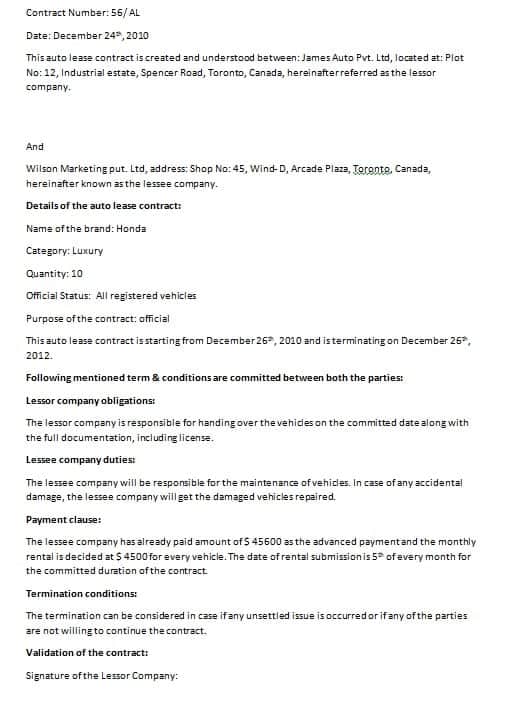

How to Use the Template
- Download and open the editable document.
- Enter the correct names, property information, dates, rent, and deposit.
- Customize responsibilities, restrictions, renewal, and termination provisions.
- Review the completed agreement with the other party.
- Sign and retain copies according to applicable requirements.
Before You Use a Lease
Inspect the premises and list exactly what the tenant receives: rooms or area, parking, storage, furniture, appliances, keys, access devices, and use of common facilities. Record the term, rent, deposit, utilities, permitted use, occupants, and any promised repairs or improvements before possession.
Example: Document Property Condition
A signed move-in report can list existing marks, damage, appliance condition, meter readings, and supplied items, supported by dated photographs. This gives both parties a common reference at move-out and is more useful than relying on memory months or years later.
Common Mistakes to Avoid
Do not assume deposit, entry, notice, rent increase, or termination rules can be freely drafted; local law may control them. Avoid unclear repair duties and informal promises about improvements. Address pets, guests, alterations, subletting, insurance, access, and return of keys where relevant to the property.
Frequently Asked Questions
Is a lease contract legally binding?
A properly formed lease can be legally binding, but enforceability depends on applicable law and the circumstances of the agreement.
Can a lease agreement be customized?
Yes. The template should be adapted to the property, parties, payment terms, local requirements, and negotiated conditions.
What is the difference between a lease and rent?
A lease generally establishes a defined contractual term and detailed rights and obligations, while “rent” commonly refers to the payment made for use of property.
Should the lease be reviewed by a lawyer?
For significant, unusual, commercial, or legally sensitive arrangements, professional legal review is advisable.
Lease Contract: Practical Review Checklist
Before using or signing this document, review every blank field and clause against the actual transaction. Confirm the legal names of the parties, dates, payment or consideration, responsibilities, deadlines, approval requirements, termination rights, and signature details. Remove provisions that do not apply and add any project-specific terms that are important to the arrangement.
Customize the Agreement for the Actual Situation
A downloadable contract sample is most useful as a drafting starting point. Avoid leaving generic wording unchanged when the real arrangement has different deliverables, payment milestones, notice periods, ownership rights, or risk allocation. Attach schedules, specifications, price lists, or other supporting documents when they form part of the agreement.
Final Checks Before Signing
- Check names, addresses, dates, amounts, and defined terms for consistency.
- Make sure responsibilities and deliverables are specific enough to understand and verify.
- Confirm payment dates, milestones, late-payment terms, and any deposits.
- Review renewal, cancellation, breach, notice, and termination provisions.
- Make sure all referenced exhibits and attachments are included.
- Keep a completed copy signed by all relevant parties.
Premises, Term, and Occupancy Details
A lease should describe the premises accurately and identify any parking, storage, furniture, appliances, common areas, or other facilities included. Record the commencement date, fixed term, renewal arrangements, permitted occupants, and permitted use. If possession begins later than signing, clarify when rent and other obligations start.
Rent, Deposits, Repairs, and Move-Out
State the rent amount, due date, accepted payment method, deposit treatment, utilities, service charges, and any lawful late-payment terms. Allocate routine maintenance and major repair responsibilities instead of using broad language. A useful move-in record can document condition with photographs. The agreement should also explain inspection or entry rights, alterations, subletting, notices, default, early termination, move-out condition, deposit reconciliation, and return of keys.
Recordkeeping and Practical Use
Keep the signed agreement together with every attachment, amendment, approval, invoice, notice, and other document that affects the parties’ obligations. Important communications should be recorded in a durable form rather than relying on memory. Before signing, compare the final document with the negotiated deal, confirm that blank spaces are completed or intentionally removed, and make sure each party receives the same final version. Templates provide structure, but the finished agreement should reflect the actual transaction and applicable law.
Additional Practical Considerations
Before signing a lease, both parties should compare the written agreement with the actual condition and intended use of the premises. Any promised repair, improvement, furniture item, parking space, storage area, or access arrangement should be documented rather than left as an informal assurance. Where permitted, an inventory and dated condition report can be attached and acknowledged by both sides. Tenants should also understand restrictions affecting business use, alterations, signage, pets, guests, or subletting, while landlords should ensure that notice, deposit, entry, and termination provisions comply with the rules that apply to the property.
Legal Disclaimer
This Lease Contract Template is provided for general informational and document-preparation purposes. It is not legal advice and may not satisfy the laws of every jurisdiction. Review and adapt the agreement as necessary before signing.
