A Tenancy Contract Template helps a landlord and tenant document the terms for renting a residential or commercial property. A clear tenancy agreement can establish rent, security deposit, tenancy period, property rules, maintenance responsibilities, utilities, notice requirements, and procedures for ending the tenancy.
What Is a Tenancy Contract?
A tenancy contract is a written agreement that gives a tenant the right to occupy a property in return for rent under agreed conditions. It also defines the landlord’s and tenant’s responsibilities and the rules that apply during the tenancy.
What Should a Tenancy Agreement Include?
- Parties: Full legal names and contact information.
- Property: Address, description, included fixtures, furniture, or parking where applicable.
- Term: Start date, end date, renewal, and notice periods.
- Rent: Amount, due date, payment method, increases, and late-payment rules.
- Security deposit: Amount, permitted deductions, and return procedure.
- Utilities and services: Responsibility for electricity, water, internet, maintenance, and other charges.
- Property rules: Pets, subletting, alterations, guests, smoking, and permitted use.
- Repairs: Allocation of routine maintenance and major repair responsibilities.
- Inspection and access: Conditions for property inspections and lawful landlord access.
- Termination: Notice, breach, unpaid rent, move-out requirements, and handover.
Why Use a Written Tenancy Contract?
A written agreement gives both parties a reliable record of the rental terms. It can reduce disagreements over rent, deposits, repairs, property use, notice, and responsibility for utilities or damage.
Before Signing
Inspect the property and document its condition. Confirm the rent, deposit, included services, utility responsibilities, repair obligations, renewal terms, notice period, and rules on subletting or alterations. Local tenancy and consumer-protection laws may override or supplement contract terms.
Free Tenancy Contract Template
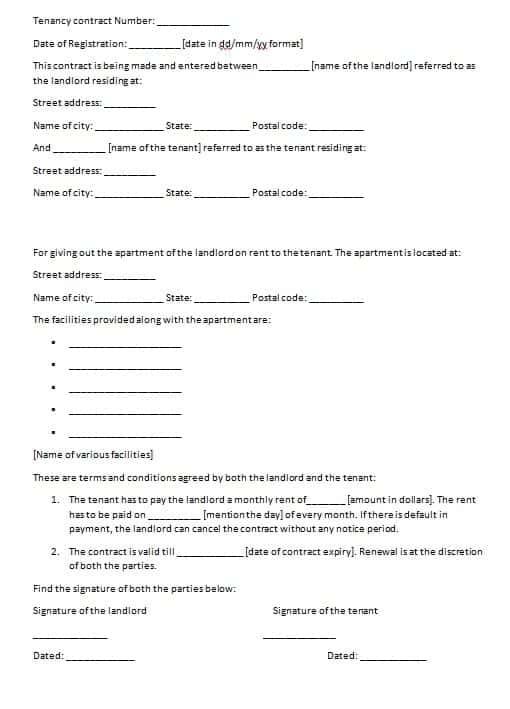
The template below provides a starting point for a landlord-tenant agreement. Customize the parties, property, rent, deposit, term, rules, maintenance obligations, and legally required notices.
Sample Free Tenancy Contract template for your reference and guidance.

How to Use the Template
- Enter landlord and tenant details.
- Describe the property and included facilities.
- Add rent, deposit, term, renewal, and payment provisions.
- Assign utilities, repairs, maintenance, and insurance responsibilities.
- Set property-use rules and notice or termination requirements.
- Review the completed agreement against local tenancy laws before signing.
Before You Use a Tenancy Contract
Record the exact property, landlord and tenant details, occupants, commencement date, term, rent, deposit, utilities, parking or storage, and included furniture or appliances. Complete a move-in condition record and identify any repairs promised before or shortly after occupancy.
Example: Build a Useful Repair Process
Instead of simply saying the landlord handles repairs, state how tenants report problems, emergency contact procedures, reasonable access for inspection or repair, and which routine responsibilities belong to the tenant. Mandatory local repair and habitability rules should take priority over inconsistent template wording.
Common Mistakes to Avoid
Avoid copying deposit, notice, entry, rent increase, or termination clauses from another jurisdiction. Clarify pets, guests, subletting, alterations, shared areas, utilities, keys, and move-out. Keep rent receipts, repair requests, notices, and condition photographs with the signed agreement.
Frequently Asked Questions
Is a written tenancy contract necessary?
A written agreement is strongly recommended because it records the rental terms and responsibilities of both parties.
Can the landlord increase rent?
Rent increases depend on the contract and applicable tenancy law. The agreement should state any permitted increase process.
Who pays for repairs?
The contract should allocate routine maintenance and major repairs, subject to mandatory local law.
Can a tenant sublet the property?
Only if the agreement and applicable law permit it. The contract should clearly address subletting and assignment.
How much notice is required to end a tenancy?
The required notice depends on the contract, tenancy type, and local law.
Tenancy Contract: Practical Review Checklist
Before using or signing this document, review every blank field and clause against the actual transaction. Confirm the legal names of the parties, dates, payment or consideration, responsibilities, deadlines, approval requirements, termination rights, and signature details. Remove provisions that do not apply and add any project-specific terms that are important to the arrangement.
Customize the Agreement for the Actual Situation
A downloadable contract sample is most useful as a drafting starting point. Avoid leaving generic wording unchanged when the real arrangement has different deliverables, payment milestones, notice periods, ownership rights, or risk allocation. Attach schedules, specifications, price lists, or other supporting documents when they form part of the agreement.
Final Checks Before Signing
- Check names, addresses, dates, amounts, and defined terms for consistency.
- Make sure responsibilities and deliverables are specific enough to understand and verify.
- Confirm payment dates, milestones, late-payment terms, and any deposits.
- Review renewal, cancellation, breach, notice, and termination provisions.
- Make sure all referenced exhibits and attachments are included.
- Keep a completed copy signed by all relevant parties.
Rent, Term, and Occupancy Rules
A tenancy agreement should clearly state the property, landlord and tenant details, commencement date, duration, rent, due date, deposit, and permitted occupants. Explain whether the tenancy renews automatically, becomes periodic, or ends on a fixed date under applicable law. House rules should be reasonable and specific, covering matters such as pets, smoking, parking, guests, noise, or use of shared areas where relevant.
Repairs, Entry, Notices, and End of Tenancy
Allocate routine care and repair responsibilities and explain how tenants report problems. Landlord access should follow applicable notice and emergency rules. Record who pays utilities and other charges, how formal notices are delivered, and the process for renewal or termination. A move-in condition record with photographs can help both sides. At move-out, document cleaning, damage assessment, key return, final meter readings, and lawful deposit reconciliation.
Recordkeeping and Practical Use
Keep the signed agreement together with every attachment, amendment, approval, invoice, notice, and other document that affects the parties’ obligations. Important communications should be recorded in a durable form rather than relying on memory. Before signing, compare the final document with the negotiated deal, confirm that blank spaces are completed or intentionally removed, and make sure each party receives the same final version. Templates provide structure, but the finished agreement should reflect the actual transaction and applicable law.
Additional Practical Considerations
Tenants and landlords can reduce later disputes by keeping a simple tenancy file. It can include the signed agreement, deposit receipt, inventory, move-in photographs, rent receipts, repair requests, inspection notices, and written approvals for alterations or additional occupants. Important notices should use the method required by the agreement and applicable law. If rent or another term changes during the tenancy, document the effective date and the basis for the change. Before the tenancy ends, both sides can review notice requirements, access for viewings where lawful, cleaning expectations, outstanding utilities, and the process for returning possession and reconciling the deposit.
Legal Disclaimer
This Tenancy Contract Template is provided for general informational and drafting purposes only and is not legal advice. Landlord-tenant laws vary by jurisdiction and may impose mandatory terms or procedures. Review the agreement under applicable local law.