

A Business Contract Template helps companies, business owners, contractors, partners, and service providers put important commercial terms in writing. A clear business agreement can define what each party must do, how much will be paid, when performance is due, and what happens if the relationship changes or a party fails to perform.
What Is a Business Contract?
A business contract is an agreement between parties concerning goods, services, money, property, employment-related services, partnerships, or other commercial activities. Depending on the transaction, it may be used for sales, purchases, consulting, leases, independent contractors, partnerships, joint ventures, licensing, or other business relationships.
When Should You Use a Business Contract?
Use a written agreement whenever a commercial relationship involves meaningful obligations, payment, confidential information, property, intellectual property, recurring services, or a significant business risk. Putting the terms in writing helps create a shared understanding before work or payment begins.
Key Clauses to Include
- Parties: Legal names, addresses, and signing authority.
- Scope of work: Detailed description of goods, services, deliverables, and standards.
- Price and payment: Fees, invoices, due dates, taxes, deposits, and late-payment terms.
- Term: Start date, duration, renewal, and extension provisions.
- Confidentiality: Protection for sensitive business and customer information.
- Intellectual property: Ownership and permitted use of work product, trademarks, or other materials where relevant.
- Warranties and liability: Appropriate representations, warranties, limitations, insurance, and responsibility for loss.
- Termination: Notice, breach, cure periods, and consequences of ending the agreement.
- Dispute resolution: Governing law, jurisdiction, mediation, arbitration, or court procedures.
Why Written Business Agreements Matter
Written contracts reduce ambiguity and give the parties a reliable record of the deal. They can clarify responsibilities, payment expectations, deadlines, ownership, confidentiality, and remedies. They also make it easier to identify exactly what was agreed if a disagreement occurs.
Oral Agreements and Electronic Signatures
Whether an oral agreement is enforceable depends on the applicable law and circumstances, and some transactions require writing or particular formalities. Electronic signatures are recognized in many jurisdictions, but requirements vary. The safest approach is to document important commercial arrangements in a properly executed written agreement.
Things to Check Before Signing
Read the scope, pricing, deadlines, renewal, termination, liability, confidentiality, intellectual-property, and dispute provisions carefully. Make sure the person signing has authority to bind the business and that referenced schedules, specifications, or attachments are actually included.
Free Business Contract Template
The template below provides a practical starting structure. Customize it for the actual transaction rather than relying on generic wording that does not reflect your business relationship.
Get Business Contract Template:
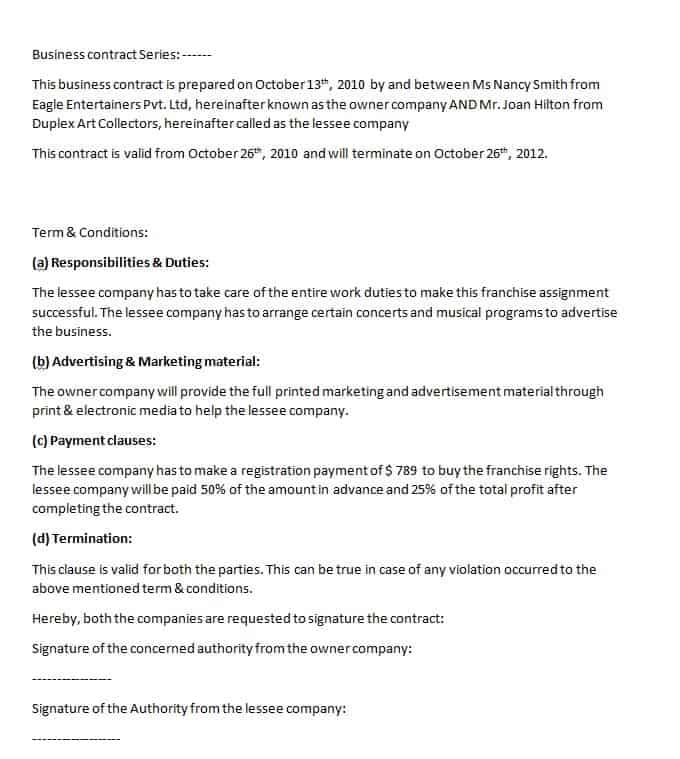
Download this sample business contract template from here free

How to Use the Template
Enter the parties’ legal information, describe the transaction, add pricing and payment terms, set deadlines, and customize the clauses for your industry. Review the completed document carefully and have qualified counsel review it when the transaction is important or complex.
Before You Use a Business Contract
Write down the commercial deal in plain language before editing legal clauses: who provides what, to whom, by when, at what price, how acceptance works, and what happens after delivery. Gather proposals, specifications, price schedules, service levels, and other documents that should form part of the agreement.
Example: Convert Expectations Into Deliverables
Instead of “provide marketing support,” identify the actual deliverables, frequency, channels, approval process, and deadlines. Instead of “payment monthly,” state when invoices are issued, when payment is due, which expenses are separately reimbursable, and how disputed invoice items are handled. Concrete terms reduce dependence on assumptions.
Common Mistakes to Avoid
Avoid copying clauses that do not match the transaction. Check for contradictions between the main agreement, proposal, purchase order, and schedules. Do not leave intellectual-property ownership, confidential information, renewal, termination, or post-termination handover unresolved when they matter to the relationship.
Frequently Asked Questions
What is the purpose of a business contract?
It records the commercial terms and responsibilities agreed by the parties.
What should a business contract contain?
Common sections include parties, scope, price, payment, term, confidentiality, liability, termination, and dispute resolution.
Can businesses use a free contract template?
Yes, a template can be a useful starting point, but it should be customized for the actual transaction.
Are oral business contracts valid?
Some oral agreements may be enforceable, but the rules vary and certain transactions require written documentation.
Can electronic signatures be used?
Electronic signatures are legally recognized in many jurisdictions, subject to applicable requirements.
Should a lawyer review a business contract?
Professional review is advisable for high-value, complex, regulated, or unusual transactions.
Business Contract: Practical Review Checklist
Before using or signing this document, review every blank field and clause against the actual transaction. Confirm the legal names of the parties, dates, payment or consideration, responsibilities, deadlines, approval requirements, termination rights, and signature details. Remove provisions that do not apply and add any project-specific terms that are important to the arrangement.
Customize the Agreement for the Actual Situation
A downloadable contract sample is most useful as a drafting starting point. Avoid leaving generic wording unchanged when the real arrangement has different deliverables, payment milestones, notice periods, ownership rights, or risk allocation. Attach schedules, specifications, price lists, or other supporting documents when they form part of the agreement.
Final Checks Before Signing
- Check names, addresses, dates, amounts, and defined terms for consistency.
- Make sure responsibilities and deliverables are specific enough to understand and verify.
- Confirm payment dates, milestones, late-payment terms, and any deposits.
- Review renewal, cancellation, breach, notice, and termination provisions.
- Make sure all referenced exhibits and attachments are included.
- Keep a completed copy signed by all relevant parties.
Using Schedules and Exhibits Effectively
Business contracts become clearer when detailed operational information is placed in schedules or exhibits and expressly incorporated into the agreement. A pricing schedule can list rates and quantities, a statement of work can describe deliverables and acceptance criteria, and a service-level schedule can record response times or performance standards. Version and date each attachment so the parties know exactly which document forms part of the signed deal.
Managing Changes During the Relationship
Commercial relationships evolve, so the contract should explain who has authority to approve changes and how amendments are documented. Avoid relying on informal messages for major changes to price, scope, deadlines, ownership, or liability. For recurring relationships, consider how renewal, price adjustments, service reviews, notices, and transition assistance will work. Maintaining a simple contract file containing the signed agreement, amendments, key notices, and acceptance records makes later administration much easier.
Recordkeeping and Practical Use
Keep the signed agreement together with every attachment, amendment, approval, invoice, notice, and other document that affects the parties’ obligations. Important communications should be recorded in a durable form rather than relying on memory. Before signing, compare the final document with the negotiated deal, confirm that blank spaces are completed or intentionally removed, and make sure each party receives the same final version. Templates provide structure, but the finished agreement should reflect the actual transaction and applicable law.
Legal Disclaimer
This Business Contract Template is provided for general informational and drafting purposes and is not legal advice. Contract requirements and enforceability vary by jurisdiction and transaction. Obtain qualified professional advice before using it for a specific business matter.
