A contract between two companies is a written business agreement that defines how two organizations will work together, exchange goods or services, share responsibilities, and handle payments and risks. A clear B2B contract gives both companies a practical framework for the relationship and reduces uncertainty about what each party has agreed to do.
The right format depends on the transaction. Two companies may use a service agreement, supplier agreement, purchase contract, master service agreement, statement of work, licensing agreement, partnership agreement, or another specialized contract. The important point is to match the document to the actual business relationship.
Why Put a Contract Between Two Companies in Writing?
Business relationships often begin with trust and informal discussions, but important terms should not depend on memory. A written contract records the agreed scope, price, deadlines, responsibilities, ownership rights, confidentiality obligations, and procedures for handling problems.
A good contract also helps prevent scope creep. When the original work is described precisely, additional requests can be treated as a change to the agreement instead of an assumption that extra work is automatically included.
Common Types of B2B Contracts
| Contract Type | Typical Purpose |
|---|---|
| Master Service Agreement (MSA) | Establishes general terms for an ongoing business relationship. |
| Statement of Work (SOW) | Defines the deliverables, schedule, and pricing for a specific project. |
| Vendor or Supplier Agreement | Sets terms for recurring goods or services supplied to another company. |
| Purchase Agreement | Documents the sale and purchase of specified products, assets, or services. |
| Partnership or Joint Venture Agreement | Defines how companies collaborate on a shared commercial venture. |
What Should a Contract Between Two Companies Include?
1. Legal Names and Contact Information
Identify both companies using their correct legal names, business addresses, authorized representatives, and relevant contact details. If a company operates through a specific subsidiary or legal entity, make sure the correct entity signs the agreement.
2. Scope of Work or Transaction
Explain exactly what one company will provide and what the other company will receive. Include specifications, deliverables, quantities, service levels, exclusions, acceptance criteria, and responsibilities. Avoid vague descriptions that can produce conflicting interpretations.
3. Price and Payment Terms
State the agreed price or pricing method, currency, invoice process, payment deadline, taxes, approved expenses, deposits, milestones, and late-payment terms. If using terms such as Net 30, define when the payment period begins.
4. Timeline and Delivery
Include start dates, delivery dates, project milestones, response times, and procedures for approved extensions. If delays caused by either party have financial or scheduling consequences, explain them clearly.
5. Confidentiality
Business relationships can involve customer information, pricing, trade secrets, technical data, strategies, and other confidential information. A confidentiality clause should explain what information is protected, how it may be used, and when disclosure is permitted.
6. Intellectual Property
If work creates designs, software, documents, content, inventions, trademarks, or other intellectual property, identify who owns existing materials and who owns newly created work. Also consider whether either party receives a license rather than full ownership.
7. Warranties and Quality Standards
Where appropriate, specify product specifications, service standards, warranties, inspection rights, correction obligations, and procedures for rejecting defective goods or incomplete work.
8. Liability and Indemnification
Explain responsibility for losses, third-party claims, property damage, or other risks. If the agreement includes a limitation of liability or indemnification provision, its scope should be reviewed carefully because these clauses can have significant financial consequences.
9. Term and Termination
State how long the contract remains effective and how either party can end it. Common provisions include termination for convenience with advance notice and termination for cause after a material breach. Include what happens to outstanding payments, confidential information, work in progress, and licenses after termination.
10. Dispute Resolution and Governing Law
Specify how disputes should be handled, such as negotiation, mediation, arbitration, or court proceedings, and identify the governing law or jurisdiction where appropriate.
Benefits of a Business-to-Business Contract
- Clear expectations: Each company understands its obligations and deliverables.
- Payment certainty: Prices, invoices, and due dates are documented.
- Better project management: Deadlines and responsibilities are easier to track.
- Protection of business information: Confidentiality and IP provisions establish clear rules.
- Reduced disputes: Written terms provide a reference when disagreements arise.
Free Contract Between Two Companies Template
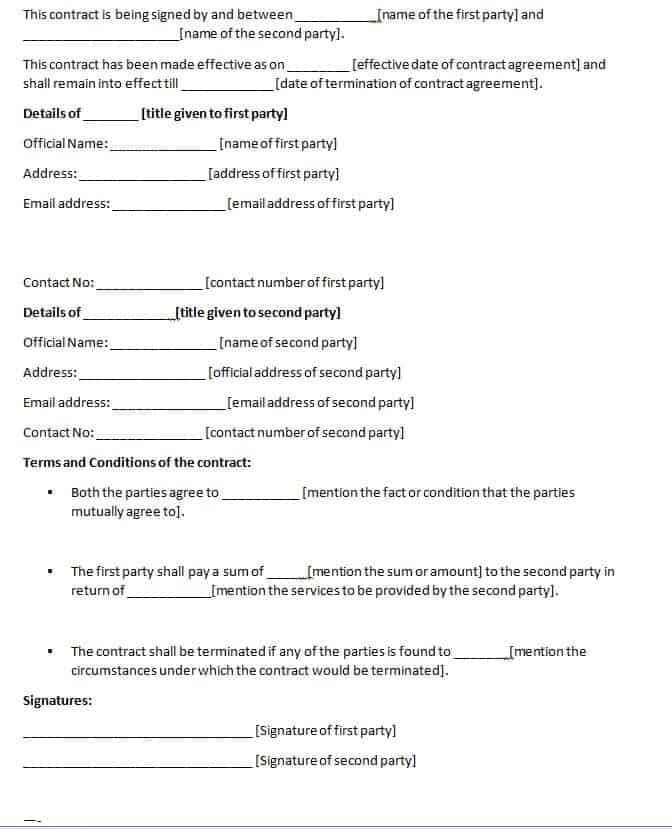
Our free Contract Between Two Companies Template provides a starting point for documenting a B2B relationship. Customize the document to reflect the actual transaction, including the legal names of the companies, scope of work, payment terms, timelines, confidentiality, intellectual property, termination, and dispute-resolution provisions.
The template below is an existing downloadable resource. The original preview images and download files have been retained.

How to Use the Template
- Enter the correct legal names and contact information for both companies.
- Describe the project, products, or services as specifically as possible.
- Add the price, invoicing process, payment deadline, and applicable taxes or expenses.
- Set realistic delivery dates and identify each company’s responsibilities.
- Customize confidentiality, intellectual property, warranty, liability, and termination clauses.
- Specify the dispute-resolution process and governing law where appropriate.
- Have authorized representatives review and sign the final agreement.
Before Two Companies Sign a Contract
Confirm each company’s correct legal name, registration details where relevant, business address, and the authority of the person signing. Then define the commercial exchange: deliverables, price, payment, deadlines, acceptance, responsibilities, and the supporting schedules or specifications. Company-to-company deals often involve several operational contacts, but formal notice and signing authority should remain clear.
Example: Define Who Can Approve Changes
A project manager may be allowed to approve routine scheduling decisions but not increase contract value. The agreement can name roles or set monetary thresholds for change approval. This prevents an informal instruction from an employee being mistaken for authorization to materially alter the company’s obligations.
Common Mistakes to Avoid
Avoid assuming that a purchase order and master contract automatically agree. Establish which terms control if documents conflict. Consider confidentiality, intellectual property, data, insurance, subcontracting, compliance, liability, renewal, termination, and transition according to the transaction rather than using one-size-fits-all corporate boilerplate.
Frequently Asked Questions
What is a contract between two companies called?
It is generally referred to as a business-to-business or B2B contract. Its specific name depends on the transaction, such as a service agreement, supplier contract, purchase agreement, MSA, or partnership agreement.
Does every B2B contract need to be complicated?
No. A simple transaction may only require a straightforward agreement covering the parties, scope, price, delivery, and basic legal terms. More complex relationships usually require additional provisions.
What is the difference between an MSA and an SOW?
An MSA normally establishes the general legal framework for an ongoing relationship, while an SOW describes the details of a particular project or assignment performed under that framework.
Should intellectual property be included?
Yes, when the relationship involves creating or using intellectual property. The agreement should clarify ownership of pre-existing materials, newly created work, and any licenses granted between the companies.
Can two companies change their contract after signing?
Usually the parties can agree to amendments, provided the applicable contract and law permit the change. Important amendments should be documented in writing and approved by authorized representatives.
Is a template enough for a major business deal?
A template is a useful starting point, but high-value, international, regulated, or otherwise complex transactions should receive appropriate legal review before signing.
Contract Between Two Companies: Practical Review Checklist
Before using or signing this document, review every blank field and clause against the actual transaction. Confirm the legal names of the parties, dates, payment or consideration, responsibilities, deadlines, approval requirements, termination rights, and signature details. Remove provisions that do not apply and add any project-specific terms that are important to the arrangement.
Customize the Agreement for the Actual Situation
A downloadable contract sample is most useful as a drafting starting point. Avoid leaving generic wording unchanged when the real arrangement has different deliverables, payment milestones, notice periods, ownership rights, or risk allocation. Attach schedules, specifications, price lists, or other supporting documents when they form part of the agreement.
Final Checks Before Signing
- Check names, addresses, dates, amounts, and defined terms for consistency.
- Make sure responsibilities and deliverables are specific enough to understand and verify.
- Confirm payment dates, milestones, late-payment terms, and any deposits.
- Review renewal, cancellation, breach, notice, and termination provisions.
- Make sure all referenced exhibits and attachments are included.
- Keep a completed copy signed by all relevant parties.
Legal Disclaimer
This Contract Between Two Companies Template is provided for general informational and drafting purposes only. It is not legal advice and does not guarantee that an agreement will be enforceable or suitable for a particular transaction or jurisdiction. Customize the document carefully and consult a qualified legal professional when appropriate.