A Exchange Agreement Template helps two parties document a transaction in which goods, assets, property, or services are exchanged for other value. Unlike a conventional sale that is primarily based on a cash price, a barter or exchange arrangement can involve a direct swap, services exchanged for services, or a combination of exchanged assets and money.
What Is an Exchange Agreement?
An exchange agreement is a written contract that identifies what each party will provide, what each party will receive, when the exchange will occur, and what happens if either side fails to perform. It can be used for business barter, equipment or vehicle exchanges, inventory, professional services, and other transactions where the parties trade value.
Common Types of Exchange Agreements
- Goods or asset exchange: Equipment, vehicles, inventory, tools, or other personal property.
- Service exchange: One business provides services in return for another service.
- Property exchange: Real estate or other valuable property transferred under a negotiated arrangement.
- Business or share exchange: Ownership interests exchanged under a more complex transaction.
- Data or intellectual-property exchange: Use of information, software, designs, or licenses under defined rights.
What Should an Exchange Agreement Include?
- Parties: Legal names, addresses, and authority to enter the agreement.
- Description of exchanged value: Accurate specifications, quantity, condition, quality, and ownership.
- Valuation: Agreed value of each item or service and any cash balancing payment.
- Delivery and transfer: Dates, locations, shipping, inspection, title, and risk of loss.
- Representations and warranties: Statements about ownership, condition, authority, and promised performance.
- Taxes and fees: Responsibility for applicable transaction costs, taxes, registration, or transfer charges.
- Default and remedies: Notice, cure periods, replacement, refund, or other agreed remedies.
- Confidentiality and intellectual property: Restrictions when sensitive information or creative work is involved.
- Dispute resolution: Governing law and procedures for handling disagreements.
Why Use a Written Barter Contract?
A written exchange agreement reduces uncertainty about what is being traded and the standard each party must meet. It is especially important when exchanged goods have significant value, services require several stages, or ownership and delivery need to be documented.
Exchange Agreement vs. Sale Agreement
A sale generally centers on payment of money for goods or property. An exchange agreement focuses on one form of value being provided in return for another, although cash may sometimes be included to equalize the transaction. The legal, tax, title, and regulatory consequences depend on the type of property or service involved.
Important Considerations Before Signing
Verify ownership, condition, specifications, valuation, delivery arrangements, and any liens or restrictions. For real estate, securities, intellectual property, or high-value assets, specialized legal and tax rules may apply. Do not assume that a general barter template covers those requirements.
Free Exchange Agreement Template
The template below is a practical starting point. Customize the parties, exchanged items or services, values, delivery terms, warranties, taxes, and remedies so the document accurately reflects the transaction.
Get Exchange Agreement Template:
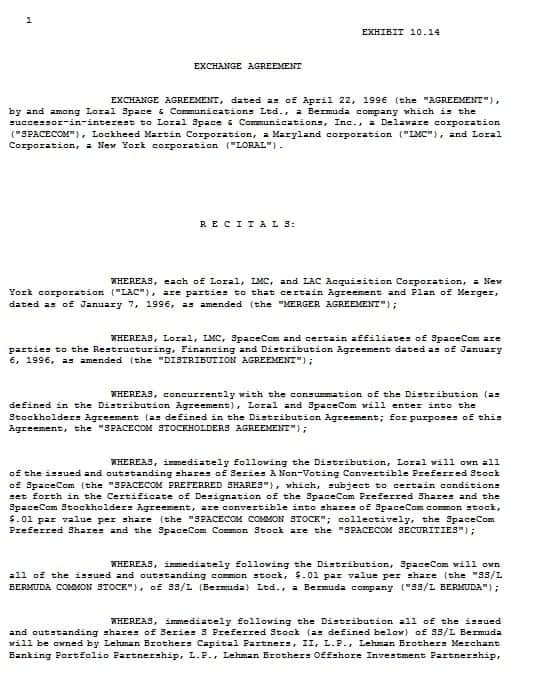
Here you can download this Exchange Agreement Template.

How to Use the Template
- Identify both parties and their legal contact information.
- Describe exactly what each party will provide and receive.
- Record agreed values and any additional cash payment.
- Set delivery, inspection, transfer, warranty, and risk-of-loss terms.
- Add default, termination, confidentiality, and dispute provisions as needed.
- Review the completed agreement and obtain appropriate signatures before the exchange.
Frequently Asked Questions
What is a barter agreement?
It is a contract documenting an exchange of goods, assets, or services instead of, or in addition to, a conventional cash payment.
Can services be exchanged?
Yes. The agreement should define each service, deliverables, deadlines, and agreed value.
Can money be included in an exchange?
Yes. The parties can specify a balancing payment when the exchanged values are not equal.
Should the condition of goods be documented?
Yes. Specifications, condition, defects, inspection rights, and warranties can prevent later disputes.
Is a 1031 exchange the same as an ordinary barter agreement?
No. A tax-deferred real-estate exchange can be subject to specific statutory requirements. It should not be treated as an ordinary barter transaction.
Is this template legal advice?
No. It is a general drafting resource and should be adapted to the transaction and applicable law.
Legal Disclaimer
This Exchange Agreement Template is provided for general informational and drafting purposes only and is not legal, tax, or financial advice. Specialized transactions may require additional documents and professional review.