Training Contract Templates provide a structured way for an employer, training provider, or organization to document a trainee’s professional development arrangement. A well-written training agreement can explain the training program, duration, duties, compensation, supervision, confidentiality, performance expectations, and termination conditions.
What Is a Training Contract?
A training contract is a written agreement that sets out the terms of a structured learning or work-experience arrangement. Depending on the organization and jurisdiction, it may be used for graduates, interns, apprentices, trainees, professional development programs, or employees receiving specialized training.
When Should You Use a Training Agreement?
- When a new employee receives structured workplace training.
- When an intern or trainee will work for a defined period.
- When a company provides a formal professional development program.
- When the parties need to document training duties, supervision, assessment, or completion requirements.
- When confidentiality, intellectual property, expenses, or equipment need specific rules.
What Should a Training Contract Include?
- Parties and training program: Identify the employer, trainee, program, and supervisor.
- Duration and schedule: State start date, expected end date, working or training hours, and attendance requirements.
- Training objectives: Explain the skills, competencies, modules, or practical experience to be developed.
- Duties and supervision: Define the trainee’s responsibilities and who provides instruction or assessment.
- Compensation and expenses: State salary, stipend, fees, allowances, reimbursement, or other agreed financial terms.
- Confidentiality: Protect business information and client or customer data.
- Intellectual property: Address ownership of work created during the training where appropriate.
- Performance and assessment: Explain evaluation, completion criteria, and corrective procedures.
- Termination: State notice requirements and circumstances allowing the arrangement to end early.
- Governing law: Include applicable jurisdiction and dispute provisions when appropriate.
Training Contract vs. Employment Contract
A training agreement may form part of an employment relationship, but the legal effect depends on the actual arrangement and local law. Do not assume that calling someone a trainee removes employment, wage, tax, licensing, or workplace obligations.
Benefits of a Written Training Agreement
A clear agreement helps both sides understand what training will be provided and what is expected in return. It can improve accountability, document learning objectives, establish a consistent schedule, and reduce disputes about payment, duties, confidentiality, or completion.
Free Training Contract Templates
The templates below provide useful starting points for different training arrangements. Customize the parties, training objectives, duration, compensation, responsibilities, and legal provisions before signing.
Download Training Contract Template:
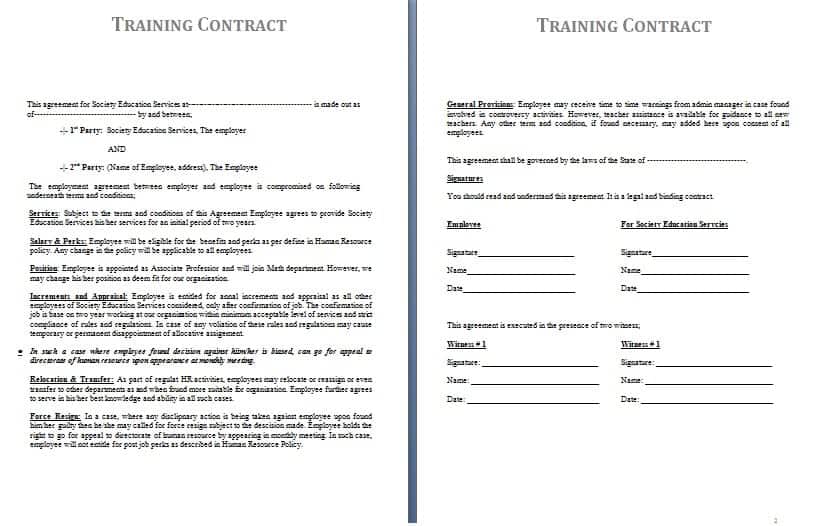
Here is free Training Contract Template.

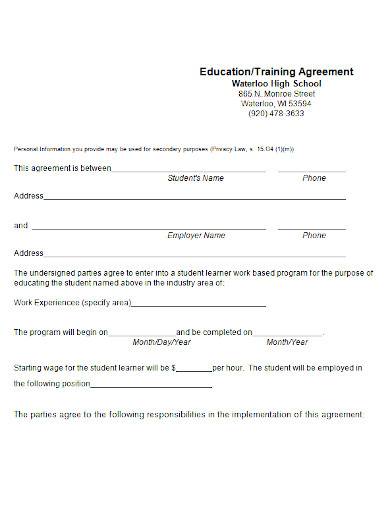

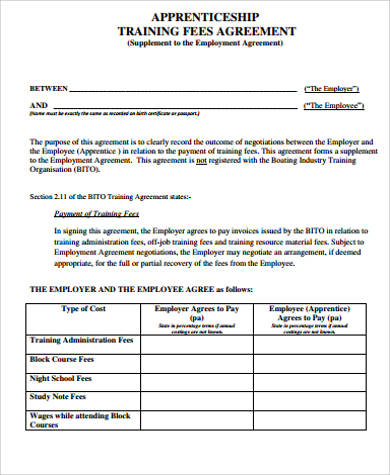
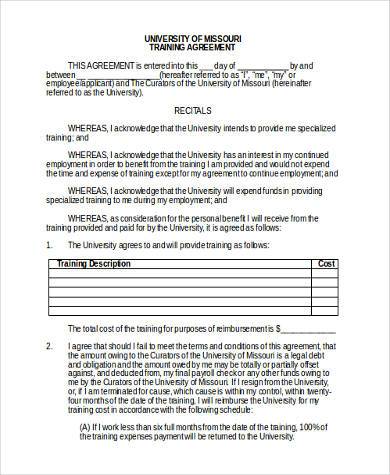
How to Use the Templates
- Choose the format closest to your training arrangement.
- Enter the legal names, addresses, dates, and supervisor information.
- Describe training objectives, duties, schedule, assessment, and completion requirements.
- Add compensation, expenses, confidentiality, intellectual property, and termination terms.
- Review the completed agreement and confirm compliance with applicable employment and training rules.
Before You Use a Training Contract
Define the learning service in practical terms: audience, objectives, modules, format, dates, duration, location or platform, trainer, materials, assessments, and completion requirements. For corporate programs, identify participant numbers and what facilities, equipment, data, or subject-matter access the client must provide.
Example: Separate Attendance From Completion
If a certificate depends on more than attendance, state the standard—for example, minimum attendance plus completion of specified assessments or practical work. If the course only confirms attendance, avoid wording that implies professional qualification or guaranteed competency.
Common Mistakes to Avoid
Avoid unclear cancellation and refund rules. Address rescheduling, trainer substitution, participant conduct, recordings, ownership of course materials, permitted internal copying, confidential company information, and personal data. If training is regulated or leads to a credential, verify the applicable accreditation or licensing requirements.
Frequently Asked Questions
Who can use a training contract?
Employers, training providers, businesses, professional firms, and organizations can use training agreements for appropriate structured learning arrangements.
Does a training contract replace an employment contract?
Not necessarily. Depending on the circumstances, it may operate alongside an employment agreement or form part of a broader employment arrangement.
Should training duration be stated?
Yes. The start date, expected duration, schedule, and any extension process should be clear.
Can a training agreement include payment terms?
Yes. Salary, stipend, fees, allowances, expenses, or other financial terms should be documented where applicable.
Is this template legal advice?
No. Employment and training rules vary by jurisdiction, so the document should be customized and professionally reviewed when necessary.
5+ Free Training Contract: Practical Review Checklist
Before using or signing this document, review every blank field and clause against the actual transaction. Confirm the legal names of the parties, dates, payment or consideration, responsibilities, deadlines, approval requirements, termination rights, and signature details. Remove provisions that do not apply and add any project-specific terms that are important to the arrangement.
Customize the Agreement for the Actual Situation
A downloadable contract sample is most useful as a drafting starting point. Avoid leaving generic wording unchanged when the real arrangement has different deliverables, payment milestones, notice periods, ownership rights, or risk allocation. Attach schedules, specifications, price lists, or other supporting documents when they form part of the agreement.
Final Checks Before Signing
- Check names, addresses, dates, amounts, and defined terms for consistency.
- Make sure responsibilities and deliverables are specific enough to understand and verify.
- Confirm payment dates, milestones, late-payment terms, and any deposits.
- Review renewal, cancellation, breach, notice, and termination provisions.
- Make sure all referenced exhibits and attachments are included.
- Keep a completed copy signed by all relevant parties.
Training Scope and Learning Deliverables
A training contract should identify the program, audience, learning objectives, format, dates, duration, location or platform, instructor responsibilities, and materials included. If completion depends on attendance, assessments, assignments, or practical demonstrations, state those requirements. For customized corporate training, document what information or facilities the client must provide.
Fees, Rescheduling, Materials, and Confidentiality
Clarify tuition or professional fees, deposits, travel costs, taxes, payment dates, and refund rules. Explain what happens when the trainer or participant cancels, a session must be rescheduled, or minimum attendance is not met. Address ownership and permitted use of slides, manuals, recordings, exercises, and other course materials. Where training involves confidential company information or participant data, include suitable confidentiality and data-handling terms.
Recordkeeping and Practical Use
Keep the signed agreement together with every attachment, amendment, approval, invoice, notice, and other document that affects the parties’ obligations. Important communications should be recorded in a durable form rather than relying on memory. Before signing, compare the final document with the negotiated deal, confirm that blank spaces are completed or intentionally removed, and make sure each party receives the same final version. Templates provide structure, but the finished agreement should reflect the actual transaction and applicable law.
Legal Disclaimer
This Training Contract Template collection is provided for general informational and drafting purposes only. It is not legal advice and does not guarantee compliance with employment, labor, education, licensing, or tax laws. Review the arrangement under the rules applicable to your location.