A Supply Contract Template helps buyers and suppliers document the terms for providing goods, materials, products, or services over an agreed period. A clear supply agreement can establish quantities, specifications, delivery schedules, pricing, payment terms, quality standards, warranties, and procedures for handling delays or defective goods.
What Is a Supply Contract?
A supply contract is an agreement under which a supplier agrees to provide specified goods or materials to a buyer according to defined commercial terms. It may cover a single delivery or recurring orders over weeks, months, or years.
When Should You Use a Supply Agreement?
Use one when a business depends on regular deliveries, negotiated pricing, specific quality requirements, or reliable lead times. It is particularly useful when a supplier relationship is ongoing and both parties need predictable purchasing and delivery rules.
Important Clauses in a Supply Contract
- Products and specifications: Identify goods, quality standards, quantities, packaging, and approved alternatives.
- Orders and forecasts: Explain how purchase orders are issued, accepted, changed, or cancelled.
- Pricing: State unit prices, discounts, price-adjustment rules, and applicable taxes.
- Delivery: Define delivery dates, locations, shipping responsibility, inspection, and risk of loss.
- Payment: Include invoice requirements, due dates, payment methods, and late-payment provisions.
- Quality and acceptance: Explain inspection rights and procedures for rejected or defective goods.
- Warranties: State product warranties and supplier obligations for replacement or correction.
- Confidentiality: Protect commercially sensitive information where appropriate.
- Term and termination: Set the contract period, renewal, notice, and termination for breach.
- Dispute resolution: Identify governing law and the process for resolving disputes.
Benefits of a Written Supply Agreement
A detailed contract can improve purchasing consistency and reduce disagreements about price, quality, delivery, and payment. It also gives the parties a documented process for dealing with shortages, delays, defective products, and changes in demand.
Before Signing
Confirm product specifications, minimum order quantities, lead times, price changes, payment conditions, delivery responsibilities, inspection periods, warranties, insurance, and termination rights. If the goods are regulated, imported, hazardous, or subject to industry-specific standards, additional requirements may apply.
Free Supply Contract Template
The template below provides a starting point for a supplier-buyer relationship. Customize it to reflect the actual products, quantities, delivery arrangements, pricing, and legal requirements.
Download Free Supply Contract Template:
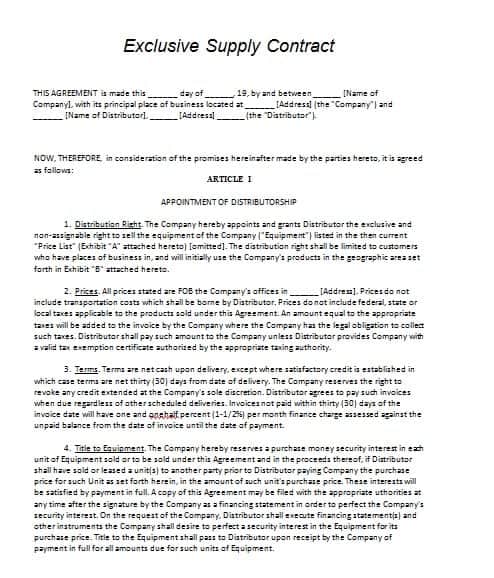

How to Use the Template
- Identify the buyer and supplier.
- List products, specifications, quantities, and ordering procedures.
- Add prices, delivery terms, payment schedule, and taxes.
- Customize inspection, warranty, defective-goods, and replacement provisions.
- Add confidentiality, termination, and dispute-resolution clauses as needed.
- Review the final agreement before signing.
Before You Use a Supply Contract
Build a product schedule containing specifications, standards, part numbers, packaging, labels, minimum quantities, lead times, and delivery locations. Distinguish forecasts used for planning from firm orders that create purchase obligations. For critical supply, discuss capacity, safety stock, and advance warning of shortages.
Example: Define Nonconforming Goods
Rather than saying the buyer may reject “bad products,” identify the agreed specification and inspection period. Explain how shortages, visible damage, specification failures, or latent defects are reported and whether the remedy is replacement, repair, credit, refund, or another agreed solution. Keep batch or shipment records where traceability matters.
Common Mistakes to Avoid
Avoid assuming a long-term supply relationship can operate without rules for price changes, discontinued products, substitutions, recalls, tooling, buyer-owned materials, or end-of-contract inventory. Make delivery terms and transfer of risk clear, especially when third-party carriers are involved.
Frequently Asked Questions
What is the purpose of a supply contract?
It documents the commercial terms for supplying goods or materials and helps both parties understand their obligations.
Can a supply contract cover recurring deliveries?
Yes. Recurring supply agreements commonly specify ordering procedures, quantities, delivery schedules, and pricing.
Who is responsible for delivery?
The contract should state who arranges shipping, pays delivery costs, and bears risk during transportation.
What happens if goods are defective?
The agreement should provide inspection, rejection, replacement, repair, credit, or other agreed remedies.
Can supply prices change?
Yes, but the contract should explain when adjustments are permitted and how notice or approval works.
Supply Contract: Practical Review Checklist
Before using or signing this document, review every blank field and clause against the actual transaction. Confirm the legal names of the parties, dates, payment or consideration, responsibilities, deadlines, approval requirements, termination rights, and signature details. Remove provisions that do not apply and add any project-specific terms that are important to the arrangement.
Customize the Agreement for the Actual Situation
A downloadable contract sample is most useful as a drafting starting point. Avoid leaving generic wording unchanged when the real arrangement has different deliverables, payment milestones, notice periods, ownership rights, or risk allocation. Attach schedules, specifications, price lists, or other supporting documents when they form part of the agreement.
Final Checks Before Signing
- Check names, addresses, dates, amounts, and defined terms for consistency.
- Make sure responsibilities and deliverables are specific enough to understand and verify.
- Confirm payment dates, milestones, late-payment terms, and any deposits.
- Review renewal, cancellation, breach, notice, and termination provisions.
- Make sure all referenced exhibits and attachments are included.
- Keep a completed copy signed by all relevant parties.
Specifications, Forecasts, and Orders
A supply contract should identify goods by specifications, standards, part numbers, packaging, labeling, and quality requirements. Distinguish non-binding forecasts from firm purchase orders and explain order acceptance, minimum quantities, lead times, and permitted substitutions. If the buyer depends on continuous supply, consider capacity commitments and advance notice of shortages or discontinued products.
Delivery, Inspection, and Defective Goods
State delivery locations, dates, transport responsibility, title and risk transfer, and documentation required with shipments. Define a practical inspection and rejection process, including the time for reporting shortages, damage, or nonconforming goods. Remedies may include replacement, repair, credit, refund, or another agreed solution. Longer-term agreements should also address price reviews, product changes, recalls, warranties, inventory planning, force majeure, and termination transition.
Recordkeeping and Practical Use
Keep the signed agreement together with every attachment, amendment, approval, invoice, notice, and other document that affects the parties’ obligations. Important communications should be recorded in a durable form rather than relying on memory. Before signing, compare the final document with the negotiated deal, confirm that blank spaces are completed or intentionally removed, and make sure each party receives the same final version. Templates provide structure, but the finished agreement should reflect the actual transaction and applicable law.
Additional Practical Considerations
Supply relationships can be disrupted by shortages, quality problems, transportation delays, or sudden demand changes. The agreement can require early warning when the supplier expects a material delay and can establish a process for revised delivery plans. Buyers with critical requirements may want agreed safety stock, priority rules, alternative sourcing rights, or business-continuity information where appropriate. Suppliers may need realistic forecast commitments and limits on last-minute order changes. The parties should also define how obsolete inventory, custom packaging, tooling, molds, specifications, and buyer-owned materials are handled when the relationship ends.
Legal Disclaimer
This Supply Contract Template is provided for general informational and drafting purposes only and is not legal advice. Customize it for the transaction, industry, and jurisdiction, and obtain professional advice where appropriate.