A Management Contract Template helps a business owner, company, property owner, or organization clearly define the services and authority given to a manager or management company. A strong management agreement can reduce uncertainty by documenting responsibilities, compensation, performance expectations, confidentiality, decision-making authority, and termination terms.
What Is a Management Contract?
A management contract is an agreement in which one party provides management or operational services for another party under defined terms. It may be used in hospitality, real estate, construction, restaurants, healthcare, manufacturing, entertainment, sports, and other industries.
Key Clauses in a Management Agreement
- Parties and scope: Identify everyone involved and describe exactly which management services will be provided.
- Authority: Define what the manager can approve, purchase, sign, hire, or negotiate and which decisions require owner approval.
- Fees and payment: State management fees, commissions, bonuses, reimbursements, taxes, invoicing, and payment dates.
- Performance standards: Include measurable targets, reporting duties, service standards, or key performance indicators where appropriate.
- Confidentiality: Protect customer information, financial records, trade secrets, business plans, and other sensitive information.
- Term and renewal: Specify the start date, duration, renewal process, and conditions for extension.
- Termination: Explain notice periods, material breach, cure periods, final payments, and return of property or records.
- Dispute resolution: Identify governing law and the agreed process for resolving disputes.
Why Use a Management Contract?
A written agreement creates accountability and gives both parties a shared reference point. It can help avoid disputes about who controls operations, how managers are paid, what expenses are authorized, what results are expected, and how the relationship can end. It is particularly valuable when the manager has significant access to money, employees, customers, property, or confidential information.
Management Contract vs. Employment Agreement
A management agreement may involve an independent management company or professional providing services, while an employment agreement generally establishes an employer-employee relationship. The distinction can affect tax treatment, benefits, authority, liability, and legal obligations, so the actual relationship should be reviewed under applicable law.
Things to Check Before Signing
Read the scope of services carefully and make sure responsibilities are specific. Review fee calculations, expense approvals, reporting requirements, authority limits, insurance, confidentiality, intellectual property, conflicts of interest, renewal, termination, and dispute provisions. Avoid leaving important financial or operational terms open to interpretation.
Download Free Management Contract Template
The template below provides a structured starting point. Customize it for the actual business relationship, services, compensation model, authority, and applicable legal requirements.
Download Management Contract Template:
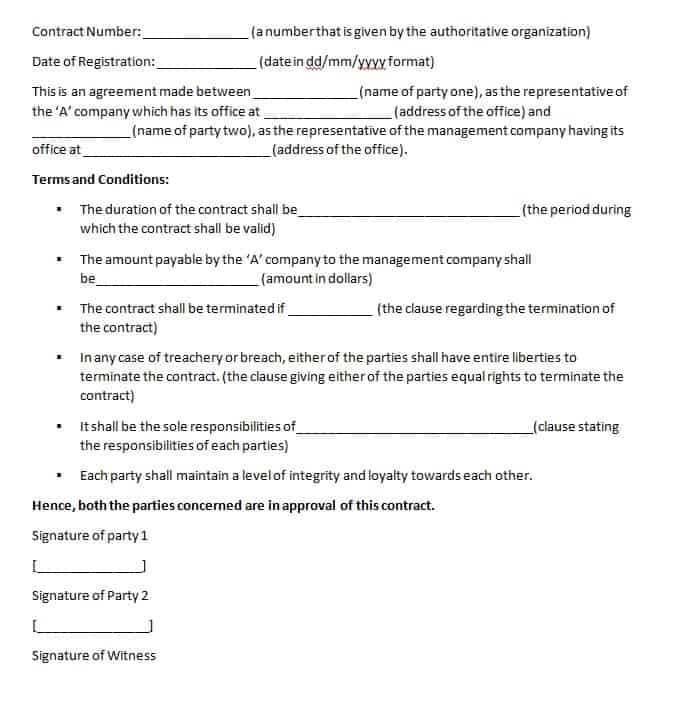
Click on the download button to download management contract template

How to Use the Template
Enter the legal names and addresses of the parties, describe the management services, define authority limits, add compensation and performance terms, and customize termination and dispute provisions. Both parties should review the final document before signing and retain copies of all schedules and attachments.
Before You Use a Management Contract
List the decisions the manager can make without approval and those reserved to the owner. Consider spending limits, vendor contracts, staffing, customer commitments, banking access, refunds, repairs, pricing, and regulatory filings. Decide what reports the owner needs and how frequently they should be delivered.
Example: Replace Broad Authority With Limits
Instead of “Manager may incur necessary expenses,” specify an approval threshold and exceptions for genuine emergencies. The agreement can require supporting invoices and periodic expense reports. Similar limits can apply to hiring, contract commitments, discounts, or capital purchases. This gives the manager workable authority without leaving the owner’s exposure undefined.
Common Mistakes to Avoid
Avoid mixing management fees with reimbursable expenses without explaining both. Do not overlook ownership of records, passwords, customer information, or accounts created during the engagement. A termination clause should include an orderly handover rather than simply stating that either party may end the contract.
Frequently Asked Questions
What industries use management contracts?
They are common in property management, hotels, restaurants, construction, business operations, entertainment, sports, and other service-based relationships.
Should management duties be detailed?
Yes. A detailed scope makes expectations easier to measure and reduces disagreements.
Can a management contract include performance targets?
Yes. Parties can agree on appropriate financial, operational, service, or reporting targets.
Can the manager have spending authority?
Yes, but spending limits and approval requirements should be clearly documented.
Can a management agreement be terminated?
Yes. The contract should explain notice, breach, cure periods, and other termination requirements.
Is a template legal advice?
No. It is a general drafting resource and should be adapted to the circumstances and applicable law.
Management Contract: Practical Review Checklist
Before using or signing this document, review every blank field and clause against the actual transaction. Confirm the legal names of the parties, dates, payment or consideration, responsibilities, deadlines, approval requirements, termination rights, and signature details. Remove provisions that do not apply and add any project-specific terms that are important to the arrangement.
Customize the Agreement for the Actual Situation
A downloadable contract sample is most useful as a drafting starting point. Avoid leaving generic wording unchanged when the real arrangement has different deliverables, payment milestones, notice periods, ownership rights, or risk allocation. Attach schedules, specifications, price lists, or other supporting documents when they form part of the agreement.
Final Checks Before Signing
- Check names, addresses, dates, amounts, and defined terms for consistency.
- Make sure responsibilities and deliverables are specific enough to understand and verify.
- Confirm payment dates, milestones, late-payment terms, and any deposits.
- Review renewal, cancellation, breach, notice, and termination provisions.
- Make sure all referenced exhibits and attachments are included.
- Keep a completed copy signed by all relevant parties.
Authority and Performance Standards
Management agreements work best when they distinguish decisions the manager may make independently from decisions requiring the owner’s approval. Consider spending limits, hiring authority, vendor selection, banking or payment authority, reporting duties, and access to records. Performance expectations can be expressed through reporting deadlines, budgets, service levels, occupancy or operational targets where appropriate, rather than relying on a general obligation to “manage” the business or property.
Fees, Records, and Conflicts of Interest
Explain the management fee carefully, including fixed fees, percentages, bonuses, reimbursable expenses, and when payment is earned. Require appropriate records and specify how often financial or operational reports must be delivered. The agreement can also address related-party transactions, gifts or commissions, confidentiality, ownership of records, and conflicts of interest. On termination, specify the handover of passwords, keys, contracts, funds, customer information, and other property.
Recordkeeping and Practical Use
Keep the signed agreement together with every attachment, amendment, approval, invoice, notice, and other document that affects the parties’ obligations. Important communications should be recorded in a durable form rather than relying on memory. Before signing, compare the final document with the negotiated deal, confirm that blank spaces are completed or intentionally removed, and make sure each party receives the same final version. Templates provide structure, but the finished agreement should reflect the actual transaction and applicable law.
Legal Disclaimer
This Management Contract Template is provided for general informational and drafting purposes and is not legal advice. Laws differ by jurisdiction and business structure. Consider professional review before using it for a specific transaction.