

A Subcontractor Agreement is a written contract between a general contractor and a subcontractor that defines the specific work to be performed, payment terms, deadlines, responsibilities, and other project requirements. It is commonly used in construction, remodeling, maintenance, technology, consulting, and other projects where a contractor hires another professional or business to complete part of the work.
A clear agreement helps prevent uncertainty by documenting what the subcontractor is expected to deliver and what the general contractor must provide or pay. It should match the actual project arrangement and comply with applicable laws, licensing requirements, insurance rules, and the terms of any main contract with the client.
What Is a Subcontractor Agreement?
A subcontractor agreement establishes an independent working relationship for a defined scope of services. The general contractor remains responsible for coordinating the overall project, while the subcontractor normally handles the particular trade, service, or deliverable assigned to them.
For example, a construction contractor may hire subcontractors for electrical work, plumbing, flooring, roofing, painting, or specialized installations. Outside construction, a company might subcontract design, software development, marketing, accounting, or other professional services.
When Should You Use a Subcontractor Agreement?
- When a contractor assigns a defined portion of a project to another business or professional.
- When payment depends on milestones, completed work, hours, units, or project stages.
- When deadlines, specifications, materials, quality standards, or inspection requirements need to be documented.
- When the parties need clear rules for insurance, permits, safety, confidentiality, or responsibility for damage.
- When the subcontractor’s work must coordinate with a larger client or prime contract.
What Should a Subcontractor Agreement Include?
1. Parties and Project Information
Identify the general contractor and subcontractor using their legal names, addresses, and contact information. Include the project name, client if relevant, and location or reference number.
2. Scope of Work
Describe the subcontractor’s exact duties, deliverables, materials, specifications, exclusions, and standards. A precise scope reduces disputes over work that was assumed but never agreed upon.
3. Schedule and Deadlines
State the start date, completion deadline, milestones, working hours where relevant, and procedures for approved extensions or delays.
4. Payment Terms
Specify the contract price or rate, deposit if any, invoices, payment schedule, milestone payments, approved expenses, retainage where applicable, and late-payment provisions.
5. Materials, Equipment, and Site Access
Clarify who supplies materials, tools, equipment, transportation, storage, permits, and access to the worksite. Identify standards for protecting the client’s property and project materials.
6. Quality, Inspection, and Corrections
Explain expected workmanship and specifications, inspection procedures, and how defective or incomplete work will be corrected.
7. Insurance, Safety, and Compliance
List required insurance coverage and professional licenses where applicable. For construction projects, address safety procedures, permits, site rules, and compliance with relevant regulations.
8. Confidentiality and Intellectual Property
When the project involves confidential information, designs, software, documents, or other intellectual property, state how those materials may be used and who owns resulting work product.
9. Independent Contractor Status
If the parties intend an independent contractor relationship, the agreement can describe that intention and the subcontractor’s responsibility for its own business obligations. However, classification is determined by applicable law and the actual working relationship, not solely by contract wording.
10. Change Orders
Include a written process for changing the scope, price, materials, or schedule. Requiring approval before additional work begins can prevent payment disputes.
11. Termination and Dispute Resolution
State when either party may terminate the agreement, required notice, treatment of unfinished work, final payment, and the process for resolving disputes.
Benefits of a Written Subcontractor Agreement
Clear expectations: The parties have a written description of the work, deadlines, and standards.
Better payment control: Rates, milestones, invoices, and approved expenses can be documented before work begins.
Project coordination: Responsibilities for materials, access, scheduling, and communication are easier to manage.
Reduced disputes: A detailed contract provides evidence of what the parties actually agreed to.
Things to Consider Before Signing
Review the scope carefully and make sure it matches any client or prime contract requirements that flow down to the subcontractor. Confirm payment conditions, deadlines, insurance, permits, safety requirements, warranties, change-order procedures, and responsibility for delays or damage.
Do not accept vague language for important obligations. If the project is high-value or involves substantial liability, construction regulations, licensing, intellectual property, or complex indemnity provisions, professional legal review can be worthwhile.
Free Subcontractor Agreement Template
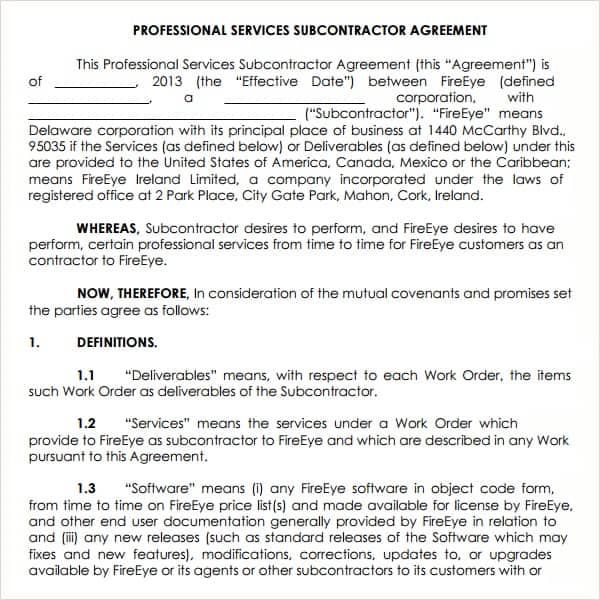
Our free Subcontractor Agreement Template provides a convenient starting point for documenting a contractor-subcontractor relationship. Customize the parties, project description, scope of work, payment terms, deadlines, insurance requirements, and other provisions to fit the actual project.
Download Subcontractor Agreement Template:

How to Use the Template
- Download the editable or printable contract format provided.
- Enter the legal names and contact information of the parties.
- Describe the project and the subcontractor’s precise scope of work.
- Add payment rates, milestones, deadlines, materials, and change-order rules.
- Customize insurance, safety, confidentiality, termination, and dispute provisions.
- Review the completed agreement with the other party and sign it before work begins.
Before You Use a Subcontractor Agreement
Start with the prime contract requirements that genuinely flow down to the subcontractor. Define the subcontract scope, drawings or specifications, schedule, coordination duties, price, invoicing, safety requirements, insurance, and the documents the subcontractor must provide. Do not incorporate an unseen prime contract without understanding the obligations being passed through.
Example: Coordinate Dependencies
If the subcontractor cannot begin until another trade completes preceding work, identify that dependency and the notice process for delay. Likewise, state what information, access, materials, or approvals the general contractor must provide. A schedule is more realistic when both parties’ dependencies are visible.
Common Mistakes to Avoid
Avoid scope gaps between trades and inconsistent drawings or specifications. Address change orders, payment documentation, defective work, cleanup, warranties, lower-tier subcontractors, safety, and project closeout. Pay-if-paid or similar clauses can have jurisdiction-specific restrictions and warrant professional review.
Frequently Asked Questions
What is the difference between a contractor and a subcontractor?
A contractor generally has the primary agreement with the client and coordinates the overall project. A subcontractor is hired by the contractor to perform a defined part of that project.
Should a subcontractor agreement include a scope of work?
Yes. A detailed scope is one of the most important parts of the agreement because it establishes what the subcontractor must deliver and helps prevent disagreements about additional work.
How should subcontractors be paid?
The agreement can provide for a fixed price, hourly rate, unit pricing, milestones, progress payments, or another agreed method. The payment method and conditions should be stated clearly.
Can the scope of work be changed?
Yes. A written change-order process can specify who may approve changes and how additional costs or time will be calculated.
Does signing this template make someone an independent contractor?
No. Legal classification depends on applicable law and the actual circumstances of the relationship. The contract should accurately reflect how the parties work together.
Can a subcontractor agreement be used outside construction?
Yes. The same basic structure can be adapted for professional services, technology, maintenance, marketing, design, and other specialized work.
Subcontractor Agreement: Practical Review Checklist
Before using or signing this document, review every blank field and clause against the actual transaction. Confirm the legal names of the parties, dates, payment or consideration, responsibilities, deadlines, approval requirements, termination rights, and signature details. Remove provisions that do not apply and add any project-specific terms that are important to the arrangement.
Customize the Agreement for the Actual Situation
A downloadable contract sample is most useful as a drafting starting point. Avoid leaving generic wording unchanged when the real arrangement has different deliverables, payment milestones, notice periods, ownership rights, or risk allocation. Attach schedules, specifications, price lists, or other supporting documents when they form part of the agreement.
Final Checks Before Signing
- Check names, addresses, dates, amounts, and defined terms for consistency.
- Make sure responsibilities and deliverables are specific enough to understand and verify.
- Confirm payment dates, milestones, late-payment terms, and any deposits.
- Review renewal, cancellation, breach, notice, and termination provisions.
- Make sure all referenced exhibits and attachments are included.
- Keep a completed copy signed by all relevant parties.
Legal Disclaimer
This Subcontractor Agreement Template is provided for general informational and drafting purposes only. It is not legal advice and does not guarantee compliance with the laws of your location or the requirements of a particular project. Customize the document carefully and consult a qualified attorney when appropriate.
