An Advertising Contract is a written agreement between a business and an advertising agency, media company, freelancer, publisher, or other marketing provider. It defines the advertising services to be delivered and establishes important commercial terms such as campaign scope, creative approvals, media placement, payment, deadlines, reporting, intellectual property, and termination.
A detailed advertising agreement helps both sides understand exactly what is being purchased and delivered. It is particularly useful when a campaign involves multiple channels, creative assets, advertising budgets, third-party platforms, or ongoing marketing services.
What Is an Advertising Contract?
An advertising contract documents the relationship between the advertiser and the party providing advertising or promotional services. Depending on the arrangement, it may cover social media campaigns, search advertising, print advertisements, television, radio, websites, outdoor advertising, influencer campaigns, creative production, or media buying.
When Should You Use an Advertising Agreement?
- When hiring an advertising agency or marketing professional.
- When purchasing advertising space, placements, or media campaigns.
- When outsourcing creative design, copywriting, video production, or campaign management.
- When the campaign involves a defined budget, schedule, performance reporting, or approval process.
- When confidential information, trademarks, photographs, videos, or other intellectual property will be shared.
What Should an Advertising Contract Include?
1. Parties and Campaign Details
Identify the advertiser and advertising provider, together with the campaign name, business objective, target audience, and relevant contact information.
2. Scope of Advertising Services
Describe exactly what services are included. This may cover strategy, creative development, media buying, ad placement, campaign management, social media advertising, reporting, or other deliverables.
3. Deliverables and Approval Process
List required advertisements, copy, graphics, videos, landing pages, placements, or other deliverables. State how revisions and client approvals will be handled.
4. Advertising Budget and Payment
Separate service fees from media or advertising spend where appropriate. Include payment dates, deposits, invoices, approved expenses, taxes, and rules for additional work.
5. Schedule and Campaign Placement
Specify campaign start and end dates, publication deadlines, media placement details, and procedures for delays or changes.
6. Performance Reporting
If reporting is included, identify the metrics and frequency of reports, such as impressions, clicks, conversions, leads, reach, or other agreed campaign indicators. Avoid promising results that cannot reasonably be guaranteed.
7. Intellectual Property and Usage Rights
Clarify ownership and licensing of advertising copy, graphics, photographs, videos, logos, campaign concepts, and other creative work. State what each party may use after the campaign ends.
8. Confidentiality and Data
Where applicable, include requirements for protecting confidential business information, customer information, campaign data, credentials, and other sensitive materials.
9. Compliance and Advertising Standards
Require the parties to follow applicable advertising, consumer-protection, platform, copyright, trademark, privacy, and industry rules relevant to the campaign.
10. Termination and Disputes
State the contract term, termination notice, treatment of prepaid advertising funds, final deliverables, and the agreed procedure for resolving disputes.
Benefits of an Advertising Contract
Clear campaign scope: The advertiser knows which services and deliverables are included.
Better budget control: Fees and advertising expenditure can be separated and documented.
Approval clarity: Both parties know who approves creative materials and how revisions work.
Protection of creative assets: Ownership and usage rights can be addressed before materials are produced.
Things to Consider Before Signing
Confirm exactly what is included in the service fee and what is paid separately as media spend. Review campaign dates, deliverables, revision limits, approval deadlines, cancellation rules, reporting, intellectual property, confidentiality, and any performance claims.
For campaigns involving large budgets, regulated industries, personal data, influencers, international advertising, or extensive intellectual property rights, consider professional legal review before signing.
Free Advertising Contract Template
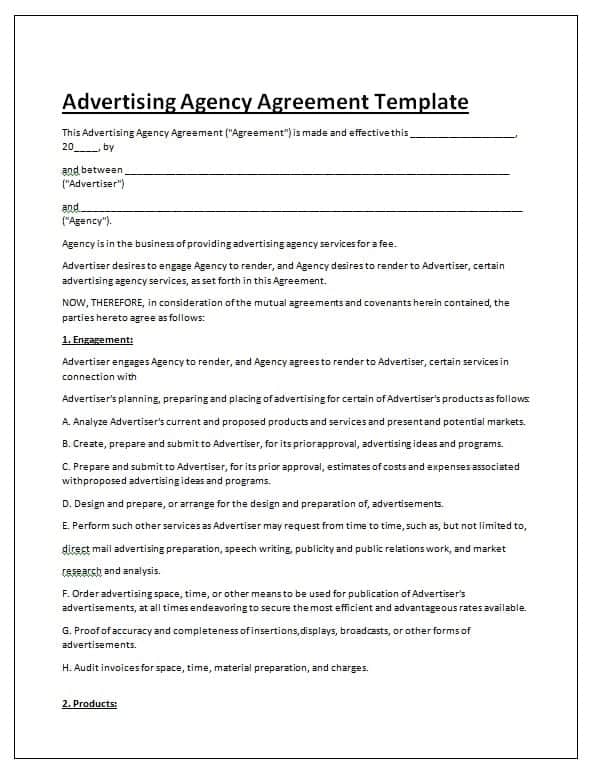
Our free Advertising Contract Template gives businesses and advertising providers a practical starting point for documenting campaign terms. Customize the parties, services, deliverables, fees, advertising budget, deadlines, approval process, rights, and other conditions for your campaign.
Download Free Advertising Contract Template:

How to Use the Template
- Download the advertising contract template.
- Enter the legal names and contact information of both parties.
- Describe the campaign, services, deliverables, platforms, and schedule.
- Add agency fees, advertising budget, payment dates, and approved expenses.
- Customize intellectual property, confidentiality, compliance, termination, and dispute terms.
- Review and sign the completed agreement before campaign work begins.
Before You Use an Advertising Contract
Turn the campaign plan into contract deliverables. Identify channels, placements, creative formats, campaign dates, audience or geography, production responsibilities, approval deadlines, media budget, agency or management fees, and reporting. Distinguish estimated performance from outcomes that are genuinely guaranteed.
Example: Define Approval and Revision Cycles
Instead of unlimited creative revisions, specify the included concepts or revision rounds, who gives consolidated approval, and how client delays affect launch dates. If the client supplies trademarks, claims, product information, or audience data, state its responsibility for timely and lawful materials.
Common Mistakes to Avoid
Avoid promising rankings, sales, leads, impressions, or conversions that depend on factors outside the advertiser’s control unless the commitment is deliberately structured that way. Address ad-platform suspensions, rejected creatives, third-party media costs, unused budgets, intellectual-property rights, account access, tracking, privacy, and campaign cancellation.
Frequently Asked Questions
Why is an advertising contract important?
It creates a written record of the campaign scope, costs, deliverables, deadlines, approvals, and responsibilities, reducing uncertainty between the advertiser and service provider.
Should media spending be included in the contract?
Yes. The agreement should make clear whether media spend is included in the provider’s fee or billed separately and who controls the advertising account and budget.
Who owns advertising content?
Ownership depends on the agreement and applicable law. The contract should clearly state whether the client receives ownership, a license, or another defined usage right.
Can an advertising contract cover social media campaigns?
Yes. It can be customized for social media advertising, including content creation, account management, paid campaigns, approval procedures, and reporting.
Can either party terminate the agreement?
Termination rights depend on the contract. Include the required notice and explain what happens to unfinished work, prepaid amounts, and active advertising campaigns.
Advertising Contract: Practical Review Checklist
Before using or signing this document, review every blank field and clause against the actual transaction. Confirm the legal names of the parties, dates, payment or consideration, responsibilities, deadlines, approval requirements, termination rights, and signature details. Remove provisions that do not apply and add any project-specific terms that are important to the arrangement.
Customize the Agreement for the Actual Situation
A downloadable contract sample is most useful as a drafting starting point. Avoid leaving generic wording unchanged when the real arrangement has different deliverables, payment milestones, notice periods, ownership rights, or risk allocation. Attach schedules, specifications, price lists, or other supporting documents when they form part of the agreement.
Final Checks Before Signing
- Check names, addresses, dates, amounts, and defined terms for consistency.
- Make sure responsibilities and deliverables are specific enough to understand and verify.
- Confirm payment dates, milestones, late-payment terms, and any deposits.
- Review renewal, cancellation, breach, notice, and termination provisions.
- Make sure all referenced exhibits and attachments are included.
- Keep a completed copy signed by all relevant parties.
Legal Disclaimer
This Advertising Contract Template is provided for general informational and drafting purposes only. It is not legal advice and does not guarantee compliance with advertising, privacy, intellectual property, or other laws applicable to your campaign. Customize the document carefully and consult a qualified professional when necessary.