

A Remodeling Contract helps a property owner and contractor clearly document the work planned for a renovation or remodeling project. A written agreement can prevent disputes about scope, materials, price, deadlines, changes, workmanship, and payment.
What Is a Remodeling Contract?
A remodeling contract is an agreement between a property owner and contractor describing renovation work and the commercial terms of the project. It can be used for kitchens, bathrooms, additions, flooring, roofing, painting, offices, apartments, and whole-property renovations.
Why Is a Remodeling Agreement Important?
Remodeling projects can change as hidden conditions are discovered or owners request upgrades. A detailed contract establishes the original scope and creates a process for approving additional work. It also documents the price, schedule, responsibilities, and quality expectations before construction begins.
Key Clauses to Include
- Parties and property: Names, addresses, and project location.
- Scope of work: Detailed work description, drawings, specifications, and exclusions.
- Price and payment: Contract price, deposit, milestones, retainage if applicable, and final payment.
- Materials: Product specifications, allowances, brands, and who purchases them.
- Schedule: Start date, completion target, working hours, and delay procedures.
- Change orders: Written approval for changes to cost, materials, or schedule.
- Permits and compliance: Allocation of responsibility for permits, inspections, and applicable codes.
- Insurance and liability: Responsibility for property damage, injuries, and required coverage.
- Warranty and corrections: Workmanship coverage and procedures for defective work.
- Termination and disputes: Notice, breach, unfinished work, governing law, and dispute procedures.
Free Remodeling Contract Template
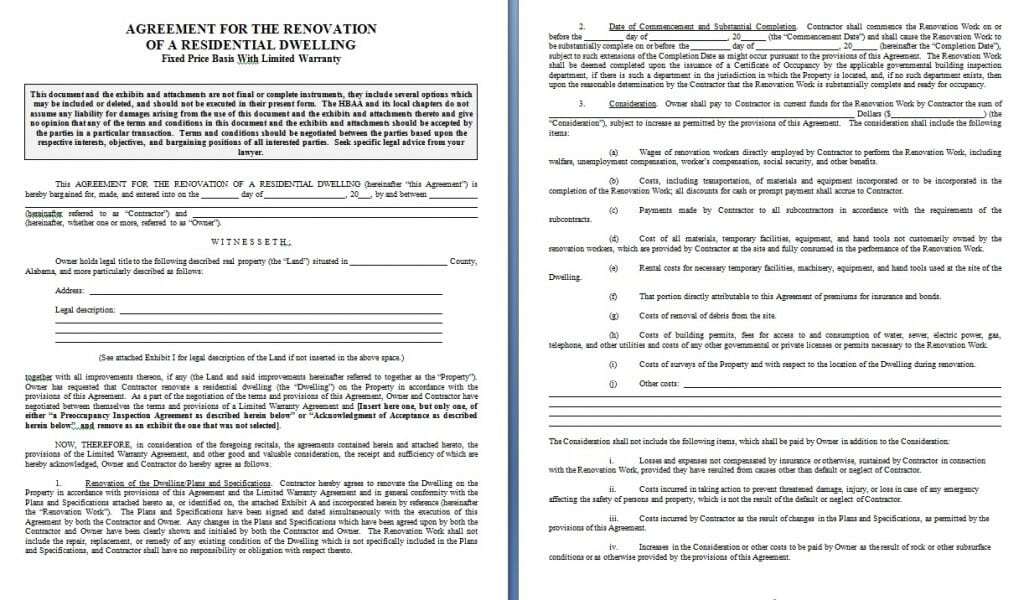
The template below provides a starting point for a renovation agreement. Customize it for the property, project drawings, scope, price, materials, schedule, warranties, and local requirements.
Download Remodeling Contract Template:

How to Use the Template
- Identify the parties and property.
- Describe the remodeling work and exclusions in detail.
- Add price, payment milestones, materials, and allowances.
- Set the schedule and process for delays.
- Document change orders, permits, warranties, insurance, and cleanup.
- Review the completed contract and attachments before signing.
Planning the Remodeling Scope and Budget
List every room, surface, fixture, system, and finish included in the project. Plans, drawings, material specifications, allowances, exclusions, and responsibility for permits should be attached or incorporated by reference. The price section should distinguish labor, materials, taxes, deposits, progress payments, and amounts retained until final completion.
Changes, Delays, and Final Acceptance
Remodeling projects often change after work begins. A written change-order process should require a description of the revised work, added or reduced cost, and effect on the completion date before the change is performed. The contract should also address access to the property, hidden conditions, owner-supplied materials, cleanup, inspections, warranties, insurance, and responsibility for delays.
At completion, the parties can use a written inspection or punch list to record unfinished or defective items. Final payment, delivery of warranties, release of liens where applicable, and acceptance of the work should be documented clearly.
Before You Use a Remodeling Contract
Prepare a detailed scope by room or trade and attach plans, finish schedules, allowances, product selections, demolition, disposal, and exclusions. Identify owner-supplied products and long-lead selections. In an occupied property, also discuss working hours, dust protection, temporary loss of utilities, access, and site security.
Example: Turn an Allowance Into a Transparent Calculation
If the contract includes a stated allowance for a fixture, explain whether the allowance covers material only or material plus tax, delivery, and labor. When the owner selects a product above or below the allowance, document the price adjustment. This is clearer than simply saying “fixtures included.”
Common Mistakes to Avoid
Avoid beginning demolition before key selections and responsibilities are understood. Hidden conditions need a written change process. Clarify permits, inspections, payment milestones, cleanup, punch-list work, warranties, manuals, and final handover. Keep approved changes with the signed contract.
Frequently Asked Questions
Should a remodeling contract include drawings?
When drawings or specifications are part of the project, identify them as contract attachments and state which document controls if there is a conflict.
Can the remodeling price change?
It can when the scope changes or unforeseen conditions are addressed, but the contract should establish how changes are approved and priced.
Who obtains permits?
The agreement should clearly assign responsibility for permits and inspections.
Should remodeling work have a warranty?
If a warranty is offered, document its duration, coverage, exclusions, and claim procedure.
Is this template legal advice?
No. Construction and consumer laws vary by location, so customize the agreement and obtain professional advice when needed.
Remodeling Contract: Practical Review Checklist
Before using or signing this document, review every blank field and clause against the actual transaction. Confirm the legal names of the parties, dates, payment or consideration, responsibilities, deadlines, approval requirements, termination rights, and signature details. Remove provisions that do not apply and add any project-specific terms that are important to the arrangement.
Customize the Agreement for the Actual Situation
A downloadable contract sample is most useful as a drafting starting point. Avoid leaving generic wording unchanged when the real arrangement has different deliverables, payment milestones, notice periods, ownership rights, or risk allocation. Attach schedules, specifications, price lists, or other supporting documents when they form part of the agreement.
Final Checks Before Signing
- Check names, addresses, dates, amounts, and defined terms for consistency.
- Make sure responsibilities and deliverables are specific enough to understand and verify.
- Confirm payment dates, milestones, late-payment terms, and any deposits.
- Review renewal, cancellation, breach, notice, and termination provisions.
- Make sure all referenced exhibits and attachments are included.
- Keep a completed copy signed by all relevant parties.
Detailed Remodeling Scope
Remodeling contracts benefit from a room-by-room or trade-by-trade scope. Attach plans, finish schedules, product selections, allowances, model numbers, and exclusions. Clarify demolition, disposal, protection of existing areas, permits, inspections, and cleanup. Allowances should state the included amount and how price differences are handled when the owner selects a more or less expensive product.
Unknown Conditions and Change Orders
Renovation work can expose hidden wiring, plumbing, structural damage, moisture, or other conditions. Explain how work pauses, who investigates, and how additional work is approved and priced. Every significant change should document scope, price, and schedule impact. Completion procedures can include inspections, a punch list, warranties, manuals, lien-related documentation where applicable, and final payment conditions.
Recordkeeping and Practical Use
Keep the signed agreement together with every attachment, amendment, approval, invoice, notice, and other document that affects the parties’ obligations. Important communications should be recorded in a durable form rather than relying on memory. Before signing, compare the final document with the negotiated deal, confirm that blank spaces are completed or intentionally removed, and make sure each party receives the same final version. Templates provide structure, but the finished agreement should reflect the actual transaction and applicable law.
Additional Practical Considerations
A remodeling project should also document owner-supplied items and long-lead materials. State who orders them, who checks dimensions or compatibility, where they will be stored, and how a late delivery affects the schedule. If the contractor receives allowances for fixtures or finishes, record the allowance amount and how differences are credited or charged. For occupied homes, working hours, dust control, temporary utility interruptions, site security, and protection of furniture can be addressed before work starts. These practical arrangements can prevent day-to-day friction even when the main construction terms are already clear.
Legal Disclaimer
This Remodeling Contract Template is provided for general informational and drafting purposes only and is not legal advice. Construction, licensing, permit, tax, and consumer-protection requirements vary by jurisdiction.
